| FICTION |
| #1 (Last Week: 2 • Weeks on List: 8) |
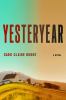
| Yesteryear |
 |
|
Caro Claire Burke
Kirkus Copyright © Kirkus Reviews, used with permission. 9780593804216 A tradwife influencer wakes up to find herself living the old-style life she’s been peddling. To her millions of followers, Natalie Heller Mills’ life appears perfect: Married to the handsome son of a wealthy, family-values-touting U.S. senator, she spends her days posting content of herself churning butter, baking, and crafting in her impeccable farmhouse kitchen; tending to the chickens and other livestock; and posing with her ever-expanding brood against the picturesque barn and rolling fields of her newly acquired Idaho farm, catchily dubbed “Yesteryear.” But the women who follow her don’t know about the nannies and other modern-day cheats that make the farm and family run. They don’t know Natalie’s husband is soft, shiftless, and perhaps not the sharpest tool in the shed. And they certainly don’t know that Natalie is not even close to being the “flawless Christian woman” she projects. “The mother every woman wanted to be, and the wife every man wanted to come home to”? Yeah, that’s just for Instagram. When Shannon, the producer Natalie hires to broaden her reach, exposes the disconnect between Online Natalie and Offline Natalie, the influencer’s perfect facade begins to crumble and her dream life becomes a nightmare. After an indeterminate amount of time—“Was it a day, a week, a month?”—Natalie wakes up to find herself in a hardscrabble, early-19th-century version of Yesteryear, with children she doesn’t recognize though they insist they’re hers and a husband who looks, but doesn’t act, like her spouse. How did Natalie get here? Is it a prank, a reality show, time travel? In Natalie, Burke has given us an absolutely riveting character—bitchy, narcissistic, and uncaring, yet also incongruously relatable and wickedly entertaining. As it sends up both MAGA and online culture, this deliciously funny, topical, and fiercely intelligent debut also probes deeper questions about authenticity, ambition, kindness, celebrity, consumerism, and what it means to be a woman in America today. It’s also a propulsive page turner, impossible to put down. A remarkable debut—both a book for the moment and one that will endure. Copyright © Kirkus Reviews, used with permission. Publishers Weekly (c) Copyright PWxyz, LLC. All rights reserved 9780593804216 A tradwife influencer gets trapped inside the harsh life of an early-19th-century homesteader in Burke’s crafty and cutting debut. To her millions of Instagram followers, Natalie Heller Mills is a “flawless Christian woman” leading an idyllic life on the self-sustaining Yesteryear Ranch with her hardworking husband, Caleb, and their five kids. In reality, the family’s remote Idaho farm is a money pit, Caleb is an internet-addicted conspiracist, and nannies raise the children while a live-in producer curates Natalie’s content, which pays the bills. When Natalie wakes one morning in a rustic facsimile of her home with a family that resembles hers but isn’t, it appears that she has traveled back in time to 1805. Is she a kidnapping victim, an unconsenting reality show contestant, or something more bizarre? All she knows for sure is that the bear traps and boredom of the early 19th century might kill her before she finds out (“Tomorrow, I will not have to shit in a rickety old shed outside”). Burke’s scathing satire of the conservative media complex unfolds from Natalie’s increasingly delusional first-person perspective as the action ping-pongs back and forth in time. Though the big reveal undercuts some of the book’s bite, the narrative is plenty riveting. Burke is off to an auspicious start. Agent: Lisa Grubka, UTA. (Apr.) |
|
| |
| #2 (Last Week: - • Weeks on List: 1) |
| Phoebe Berman's Gonna Lose It |
 |
|
Brooke Averick
Kirkus Copyright © Kirkus Reviews, used with permission. 9798217088263 A 29-year-old with a “phobia of intimacy” is determined to lose her virginity in Averick’s debut novel. Phoebe Berman thinks there is something wrong with her. On paper, her life looks ideal: She has her dream job teaching pre-K, a supportive family, and a tightknit group of friends in Los Angeles. But as her 30th birthday approaches, Phoebe fixates on her lack of romantic experience—specifically, the fact that she’s still a virgin. Though she considers herself a lifelong romantic, intimacy has terrified Phoebe ever since a middle school incident turned a potential first kiss into a public disaster. So hyperorganized Phoebe does what she does best: She makes a list. Instead of following her therapist’s suggestion to catalog her accomplishments, she creates “Phoebe’s Guide to Losing Her Virginity in Thirty Days,” a checklist featuring tasks that range from “Redownload Hinge” to “Get drunk and make out with a stranger.” Phoebe soon finds herself torn between several romantic prospects, including Matthew, a former high school classmate with whom she shares her daily Wordle scores; Finn, the charming new fourth grade teacher at her school; and Jonathan, her longtime roommate and best friend of 12 years, with whom her parents always dreamed she’d end up. Throughout it all, Phoebe is forced to confront her fears and assumptions about love, intimacy, and herself. Averick’s writing is consistently funny and sharp, balancing comedy with emotional honesty. Phoebe is an intensely relatable main character whose kindness and vulnerability make her easy to root for. Filled with plot twists readers won’t see coming, the book is an irresistibly fun ride that also delivers a compassionate exploration of anxiety and the courage and self-acceptance needed to move through it. An affirming novel catering to all the anxious romantics out there. Copyright © Kirkus Reviews, used with permission. Publishers Weekly (c) Copyright PWxyz, LLC. All rights reserved 9798217088263 Debut author Averick sparkles in this empowering rom-com. Pre-K teacher and romance novel lover Phoebe Berman is a few weeks away from her 30th birthday and despairing that she’s never had sex. Unfortunately, crippling social anxiety has left her terrified of dating, still traumatized by an unfortunate vomiting incident during her first kiss 17 years ago. Now, however, the chronic list maker creates a “Guide to Losing Her Virginity in Thirty Days,” encouraging herself to explore a range of scenarios for potentially meeting someone, from the cute (petting a dog and striking up a conversation with its attractive owner) to the last resort (advertising herself on Craigslist). Things seem to be looking up for Phoebe when school starts and she meets gorgeous new fourth-grade teacher Finn. But even as Finn appears to take an interest, Phoebe’s roommate and close friend, Jonathan, suddenly starts acting weird (could he be jealous?), and a former classmate, Matthew, with whom she once exchanged flirtatious text messages, unexpectedly reenters her life. Averick makes the romantic entanglements fun and surprising, and Phoebe’s personality—including her palpable and sensitively handled anxiety—leaps off the page. The result is smart, savvy, and irresistible. (May) Book list From Booklist, Copyright © American Library Association. Used with permission. 9798217088263 Anxious, funny, and unexpectedly tender, this debut follows Phoebe Berman as she approaches her thirtieth birthday, still a virgin and increasingly convinced something is wrong with her. Dating triggers such intense physical anxiety that even getting through a meal can feel impossible, but Phoebe is determined to stop letting fear run her life. She creates a plan to finally have sex before her birthday, only to find herself juggling complicated feelings for three very different men: her longtime best friend Jonathan, a charming new coworker named Finn, and Matthew, a familiar figure from her past who represents unfinished business. As Phoebe navigates romantic missteps, therapy sessions, and a tight-knit group of friends who know her flaws and love her anyway, the novel balances laugh-out-loud moments with honest portrayals of intimacy, anxiety, and self-doubt. Averick gives Phoebe a full inner life beyond romance, allowing her growth to feel earned. With sharp humor, surprising turns, and a deeply empathetic heroine, Phoebe Berman's Gonna Lose It updates the spirit of classic rom-coms while centering vulnerability, mental health, and friendship. |
|
| |
| #3 (Last Week: - • Weeks on List: 1) |
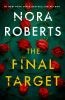
| The Final Target |
 |
|
Nora Roberts
Kirkus Copyright © Kirkus Reviews, used with permission. 9781250413581 An author is targeted by a fan who just can’t let her go. Arden Bowie has had plenty of tragedy in her life, but now she’s finally on top. After her parents died when she was a teenager, she moved from Brooklyn to Ohio to live with her aunt, uncle, and cousins. She soon became part of their loving family and grew up to become a writer and bookseller. When her debut novel is published, she meets Dustin Dubecki at her first event. He showers her with praise, asks for writing advice, and wants to take her out for coffee. Arden tells herself he’s just a little awkward, but then he keeps showing up at her local events—and, even stranger, she’s sure she sees him lurking at her event in New York City. When he bursts into her apartment one night and assaults her, Arden’s calm life is shattered. Dustin gets a five-year sentence at a psychiatric facility; Arden spends most of that time rebuilding her sense of stability. Eventually, she moves to Oregon to start a new life where Dustin can never find her. But even though she has a beautiful home, a thriving career, a doting family, new friends, and even a potential love interest in a former cop named Gideon Riley, Arden can’t escape Dustin’s rage when his sentence is finally up. Roberts toggles between Arden’s point of view and Dustin’s, giving the reader occasional glimpses into his extremely twisted mindset. Although Arden’s attempts to escape Dustin are engrossing, the story stalls in the middle when far too many pages are dedicated to Arden purchasing and decorating a house. But the excitement picks back up when Dustin, a truly odious villain, re-enters the story. It’s also satisfying to see Arden grow into someone who refuses to be a victim, even as she deals with horrifying circumstances. A particularly nasty villain heightens the stakes in this thriller about a woman learning how to be her own hero. Copyright © Kirkus Reviews, used with permission. Book list From Booklist, Copyright © American Library Association. Used with permission. 9781250413581 The first time is kind of sweet. That is what Arden Bowie thinks when Dustin Dubecki turns up at the launch event for her debut book, Whispers. Claiming to be an aspiring author, Dustin seems harmless if a bit socially clueless. However, when Dustin keeps turning up at events where Arden is speaking, it begins to get creepy. Clearly her efforts to brush Dustin off without hurting his feelings are not working. He shows up at her apartment one evening and forces his way in. While Dustin’s assault of Arden puts him behind bars, Arden still doesn’t feel safe. Moving from her home in Ohio to Oregon seems to be a good step in reclaiming her life. But Dustin has a deadly score to settle with everyone he believes is responsible for putting him in a psychiatric prison, and the last person on that list is Arden. Roberts (The Seven Rings, 2025) masterfully delivers another of her infectiously readable mixes of sinisterly startling suspense and chemistry-rich romance layered into a meticulously crafted plot and enhanced with a realistically relatable cast of family and friends.HIGH-DEMAND BACKSTORY: Since so many of perennially best-selling Roberts' books run in series, readers will be excited about this writer-centric stand-alone thriller. |
|
| |
| #4 (Last Week: - • Weeks on List: 1) |
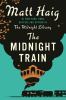
| The Midnight Train |
 |
|
Matt Haig
Book list From Booklist, Copyright © American Library Association. Used with permission. 9780593833377 Beloved book-club favorite Haig (The Life Impossible, 2024) returns with a novel that looks back on one man’s life and how it might have gone wrong—or right. After he dies at 81, Wilbur Budd finds himself at a mysterious train station just after midnight. He encounters Agnes Bagdale, the proprietor of a bookshop where he spent his young life reading. Agnes tells him he’s on his way to eternity, but he must relive his life through the train’s windows. The train stops at important spots so he can join his younger self as a Ghost. Wilbur regrets many things, from the death of his brother to his obsession with work, but he most regrets losing his wife, Maggie. While stopped at their honeymoon in Venice, the Ghost wonders if there is a way to save their relationship, even if it means he will cease to exist. While this is not a direct sequel to The Midnight Library (2020), it is a sequel in spirit: written in the space between life and death, both novels consider the impossible ways a person might start over. Kirkus Copyright © Kirkus Reviews, used with permission. 9780593833377 An elderly man’s posthumous journey back through his life has unexpected consequences for several people, and lessons for everyone. It is a truth universally acknowledged that readers adore any novel set in a reading group, bookshop, or library, from the terribly sad (The Guernsey Literary and Potato Peel Pie Society, 2008) to the puzzle-heavy (Mr. Penumbra’s 24-Hour Bookstore, 2012) to the downright clever (The Uncommon Reader by Alan Bennett, 2007). Haig, who’s already writtenThe Midnight Library (2020), mines a similar vein in this novel centered on a bookseller named Wilbur Budd; place this one in the seriously sentimental category. Wilbur dies at 81 just after receiving a call from his ex-wife, Maggie. He finds himself on a classic steam-train carriage, accompanied by a younger version of the woman who founded the bookstore he turned into a global conglomerate. As Mrs. Agnes Bagdale explains, he’s on a trip to significant places and events from his life, but he’s forbidden from interfering in them, thus possibly changing the course of other people’s lives. True to his maverick tendencies, Wilbur struggles with the three rules of the train (“You get on and off the train as required. You never try and speak to yourself. And you mustnever be there when you fall asleep”) and struggles even more mightily as he realizes that Maggie was his true love and lifelong lodestar. While some moments verge on maudlin, as when Wilbur and Maggie goggle at Venice during their honeymoon, these are tempered by quieter observations, as when Wilbur’s oldest friend, Charlie, tells him frankly during lunch at a trendy restaurant that his constant ambition is a failing. This isn’t a subtle book and it’s not trying to be; it’s urging readers to think about their own choices, wherever they find themselves. A shaky balance between saccharine and sage will nevertheless appeal to the author’s fans and readers seeking balm. Copyright © Kirkus Reviews, used with permission. Publishers Weekly (c) Copyright PWxyz, LLC. All rights reserved 9780593833377 Haig offers a touching companion piece to his 2020 novel The Midnight Library, this time following an 81-year-old bookstore chain owner who finds a second chance in the afterlife. Wilbur Budd has devoted himself to his business for decades, which caused him to neglect his wife, Maggie, and lose her many years earlier. She surprises him with a phone call, in which she expresses a desire to become friends again. Shortly after, he collapses and dies. In the afterlife, he finds himself at a train station and realizes he’s the same age as when he and Maggie honeymooned in Venice. The train that arrives is the full-size version of a toy train he had as a child. Aboard it is Agnes Bagdale, who owned the bookstore Wilbur frequented as a young boy. Agnes then leads him on a tour of his past, stressing that he must not try to speak to his younger self. However, he breaks the rule when the train brings him to his honeymoon. Haig occasionally slips into platitudes (“It only takes a moment to die, but a whole lifetime to learn how to live”), but he authentically evokes Wilbur’s fears and regrets over the course of a life marked by sacrifice. This will please the author’s fans. Agent: Clare Conville, C&W Agency. (May) |
|
| |
|
|
| |
| #6 (Last Week: 6 • Weeks on List: 31) |
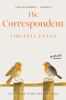
| The Correspondent |
 |
|
Virginia Evans
Library Journal (c) Copyright Library Journals LLC, a wholly owned subsidiary of Media Source, Inc. No redistribution permitted. 9798217066384 Evans's heartfelt debut, told through a series of marvelous letters, gets to the heart of the human connection. Sybil Van Antwerp is a complex figure: a 73-year-old retired lawyer, literary enthusiast, mother, grandmother, ex-wife, sister, adopted daughter, and, above all, dedicated pen pal. She is fiercely stubborn, thoughtful, and blunt; to her great dismay, she is gradually losing her eyesight. Sybil's life story is beautifully told through letters exchanged between her and a range of characters, expertly narrated in this audiobook by a large cast of seasoned voice actors. Sybil corresponds with a staggering variety of people: well-known authors (including Ann Patchett, Larry McMurtry, and Joan Didion), her caring neighbor, family members, friends, professors, long-lost relatives, customer service representatives, and a mysterious, disgruntled person from her past. Each letter is unique, a compelling monologue that communicates raw emotion and grief alongside humor and tart observations. Every missive offers glimpses into the characters' lives, allowing listeners to get to know them through their pieced-together exchanges. VERDICT Evans's epistolary novel is funny and dear, with a family drama and a bit of mystery too. It is a treasure.—Sarah-Ruth Tasko Book list From Booklist, Copyright © American Library Association. Used with permission. 9780593798430 Evans' debut is an epistolary tour through the mind of retired Maryland law clerk Sybil Von Antwerp, who takes great joy in all forms of correspondence, from handwritten letters to emails. Here are thoughtful missives to her favorite authors such as Joan Didion and Ann Patchett, repeated email requests to audit a course at a local college, and exchanges with a customer service representative that become surprisingly involved. Mixed in with those are letters to friends and family that reveal details about Sybil's life: her divorce long ago from a man she still cares for, her strained relationship with her adult children, and a tragedy that changed the course of Sybil's life and still haunts her. Several developments threaten to upend Sybil's placid existence. She's receiving threatening letters from someone bearing a grudge about a court case from decades ago. She's been gifted with a subscription to a DNA company that will allow her to find blood relatives. And she has not one but two suitors circling her, a tenacious lawyer and a thoughtful, quiet neighbor. Charming, engrossing, and deeply moving, Evans' novel explores the way everyday choices and relationships shape a life and shows it's never too late to form new connections, make amends, or even fall in love. Publishers Weekly (c) Copyright PWxyz, LLC. All rights reserved 9780593798430 The charming debut from Evans takes the form of letters and emails exchanged by a divorced and retired woman with her friends, family, foes, and literary idols. It begins in 2012 as Sybil Van Antwerp, 73, politely declines an invitation to visit her brother, Felix, in France, then fancifully invites the author Ann Patchett to use her Maryland home as a writer’s retreat. Sybil spent her career clerking for a judge, and after reading of his death in the newspaper, she begins receiving strange and threatening letters from an aggrieved former defendant, who calls her a “cold metal bitch.” Evans juxtaposes these screeds with Sybil’s intimate fan mail to Joan Didion, who writes her back in 2013, expressing empathy as a fellow member of “the club of parents who have buried children” (Sybil lost a son at eight). Sybil, who was adopted, grows curious about her ancestry after her older son gives her a DNA test for Christmas, and she brushes off concerns about her declining eyesight from her daughter, Fiona, who lives in Australia. As the years go on, Sybil’s relationships brim with tension waiting to be released, and the detailed connections between each character are brilliantly mapped through the correspondence. It adds up to an appealing family drama. Agent: Hilary McMahon, Westwood Creative Artists. (May) Kirkus Copyright © Kirkus Reviews, used with permission. 9780593798430 A lifetime’s worth of letters combine to portray a singular character. Sybil Van Antwerp, a cantankerous but exceedingly well-mannered septuagenarian, is the titular correspondent in Evans’ debut novel. Sybil has retired from a beloved job as chief clerk to a judge with whom she had previously been in private legal practice. She is the divorced mother of two living adult children and one who died when he was 8. She is a reader of novels, a gardener, and a keen observer of human nature. But the most distinguishing thing about Sybil is her lifelong practice of letter writing. As advancing vision problems threaten Sybil’s carefully constructed way of life—in which letters take the place of personal contact and engagement—she must reckon with unaddressed issues from her past that threaten the house of cards (letters, really) she has built around herself. Sybil’s relationships are gradually revealed in the series of letters sent to and received from, among others, her brother, sister-in-law, children, former work associates, and, intriguingly, literary icons including Joan Didion and Larry McMurtry. Perhaps most affecting is the series of missives Sybil writes but never mails to a shadowy figure from her past. Thoughtful musings on the value and immortal quality of letters and the written word populate one of Sybil’s notes to a young correspondent while other messages are laugh-out-loud funny, tinged with her characteristic blunt tartness. Evans has created a brusque and quirky yet endearing main character with no shortage of opinions and advice for others but who fails to excavate the knotty difficulties of her own life. As Sybil grows into a delayed self-awareness, her letters serve as a chronicle of fitful growth. An affecting portrait of a prickly woman. Copyright © Kirkus Reviews, used with permission. |
|
| |
| #7 (Last Week: 7 • Weeks on List: 4) |
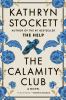
| The Calamity Club |
 |
|
Kathryn Stockett
Book list From Booklist, Copyright © American Library Association. Used with permission. 9781954118812 Poverty is a great leveler of society’s uneven factions and nowhere was this more evident than in rural Mississippi during the Great Depression. Careful and responsible, Birdie must find the funds to support her widowed mother and feeble grandmother. She is sent to Oxford where her sister, Frances, has married into old money. Once there, however, Birdie finds her pedigreed in-laws no better off now that Frances’ husband has absconded with the family fortune. Through Frances’ volunteer position with the local orphanage, Birdie meets 11-year-old Meg, one of the so-called “big girls” whose chances of adoption shrink with every birthday. Meg is convinced her mother, Charlie, would never have abandoned her to such a hopeless fate and clings to the fantasy that she’ll return for her. And return she does, thanks to Birdie’s kindness, Charlie’s ingenuity, and their unconventional partnership as proprietors of a brothel. As she did in The Help (2009), Stockett again satirizes the hypocrisy underpinning much of the early-twentieth-century South in a saga populated with memorable characters who rely on stock-in-trade pluck and sass to right all wrongs.HIGH-DEMAND BACKSTORY: The enormous success of The Help as a novel and as the source for the Academy Award–winning film has left readers longing for Stockett's second novel. Library Journal (c) Copyright Library Journals LLC, a wholly owned subsidiary of Media Source, Inc. No redistribution permitted. 9781954118812 Stockett's second novel (following her blockbuster debut, 2009's The Help) is set in the American South during the Great Depression. The story alternates between protagonists Birdie Calhoun, who arrives in Oxford, MS, to ask her sister Frances for money to avoid foreclosure, and 11-year-old orphan Meg LeFleur, who is eager to be reunited with her mother. As the plot progresses, Birdie dates a complicated man, additional characters create a brothel to generate income, and a Gatsby-esque couple, who initially adopt Meg, face a crisis. While there is much happening in this novel, the strongest moments involve the bitterness of an affair surrounding Meg's parentage and Birdie learning that her sister's husband has a secret that affects his reputation. The women in this novel are distinct and memorable; however, the pacing is uneven. As the characters reckon with their situations, the plot gains momentum, only to lag again once the details of other storylines intervene. VERDICT Although there will be high demand for Stockett's return to fiction, fans hoping for a novel as dynamic as The Help might be disappointed.—Tina Panik Kirkus Copyright © Kirkus Reviews, used with permission. 9781954118812 Stockett heads to Mississippi for another historical novel about feisty women. This time, perhaps recalling criticisms of cultural appropriation inThe Help (2009), she sticks to feisty white women, with one exception. The setting is Oxford in 1933. For two miserable years, 11-year-old Meg has lived in “the Orphan,” a county asylum for parentless girls. Chairlady Garnett—a villain so one-note she’d twirl a mustache if she had one—makes it her mission to ostracize the older girls she deems unadoptable, stigmatizing them as offspring of the “feebleminded” mothers who abandoned them. She particularly has it in for smart, sassy Meg, who refuses to believe her mother’s mysterious disappearance was deliberate. Elsewhere in Oxford, Birdie Calhoun comes to visit her sister Frances, who married a wealthy banker, to ask for money on behalf of their mother and grandmother back in Footely. Frances isn’t thrilled by this reminder of her impoverished small-town origins. But she’s trying to climb up in Oxford society by volunteering at the Orphan, the asylum’s books need to be done before the state inspector shows up in a few weeks, and Birdie is a bookkeeper. Having neatly arranged to keep Birdie in town and draw these two storylines together, Stockett goes on to spin a compulsively readable yarn with enough plot for a half-dozen novels. Birdie and Meg become friends, Meg is adopted despite Garnett’s best efforts, Meg’s mother turns up at the Orphan demanding to know where her child is—and that’s less than a quarter of the way through a long, winding narrative that keeps piling on more dramatic developments until all loose ends are neatly, if hastily, wrapped up in the final pages. Stockett might be making a point about Southern women facing facts and standing up for themselves, but mostly this is just a satisfyingly twisty tale that should make a great miniseries. Fans of Stockett’s bestselling debut will love this engaging follow-up. Copyright © Kirkus Reviews, used with permission. Publishers Weekly (c) Copyright PWxyz, LLC. All rights reserved 9781954118812 Stockett’s vibrant follow-up to her bestselling 2009 novel, The Help, traces the intersecting lives of an exasperated older sister, a precocious orphan, and an enterprising woman in 1933 Mississippi. Eleven-year-old Meg Lefleur endures a miserable existence at the Lafayette County Orphan Asylum for Girls in Oxford. Singled out by the cruel director, Meg is forced to toil in the institution’s offices rather than attend school. Too old to be adopted, she counts down the days until her 12th birthday, when she’ll be sent to work in a Biloxi cannery—though she still clings to hope that the mother who abandoned her might return. Meanwhile, Birdie Calhoun, 24, is forced into action when back taxes threaten the rural home she shares with her mother and grandmother in the Delta. She travels to Oxford to ask her younger sister, Frances, for help, only to discover that Frances’s supposedly charmed life is far less so than it seems. There, Birdie crosses paths with Meg and Charlie, a down-on-her-luck woman with a wild idea for making a fortune and reclaiming control of her life. The pace slackens at times, but Stockett holds the reader’s attention with her colorful characters. By turns hilarious and heartbreaking, this offers a memorable view into the impossible choices faced by women in the Great Depression. Agent: Kim Schefler, Levine Plotkin. (May) |
|
| |
| #8 (Last Week: 5 • Weeks on List: 4) |
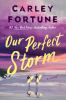
| Our Perfect Storm |
 |
|
Carley Fortune
Publishers Weekly (c) Copyright PWxyz, LLC. All rights reserved 9780593953242 Bestseller Fortune (One Golden Summer) delivers a tender tale about a childhood friendship blooming into more over the course of a weeklong getaway. Former sous chef Francesca “Frankie” Gardiner is ready to tie the knot—until her fiancι dumps her during their wedding weekend via a note. Blindsided by the breakup, feeling directionless in her career, and lamenting the idea of having to start over again at age 30, Frankie returns to her family’s home. While there, her best friend of more than two decades, George Saint James, arrives with a proposition: the two of them will go on her honeymoon in Tofino, British Columbia, where he’ll help her process the breakup with the aid of a meticulously researched itinerary. Frankie agrees to this picturesque vacation with the hope of rebuilding their recently strained friendship, but along the way she comes to realize she no longer views George in a purely platonic light. As tension brews between the leads, Fortune expertly intersperses glimpses into the highs and lows of the pair’s past, showcasing their ever-evolving dynamic. The inevitable third act conflict feels somewhat predictable and underwhelming, but readers will be charmed by the idyllic setting and Frankie and George’s unwavering devotion to each other. People We Meet on Vacation fans should check this out. Agent: Taylor Haggerty, Root Literary. (May) Book list From Booklist, Copyright © American Library Association. Used with permission. 9780593953242 Frankie is holding her breath at her rehearsal dinner, awaiting her best friend George’s arrival. He shows up, despite their big blow-up when he told her she shouldn’t marry her fiancι, Nate. The next morning, Frankie wakes up to a “Dear Jane” note from Nate. The story flashes back to Frankie’s and George’s childhoods, when a heartbroken Frankie, whose mother left her family behind for a dream job, meets George, who has just started living with his grandmother. They quickly become inseparable, and, although Frankie’s mother returns, the only person Frankie can count on is George. Alternating between present and past, Fortune (One Golden Summer, 2025) shows how Frankie and George’s friendship grows, from nine-year-old playmates to twenty-something roommates to their current phase: distant, but still showing up when it matters. George persuades Frankie to go on her honeymoon and, while she’s in paradise, he plans daily events to try to heal her broken heart . . . but Frankie sees the trip as an opportunity to fix their strained friendship. What neither really bargain for are the romantic feelings that start to bubble up. This novel has romance, friendship, heartache, and steamy scenes, a perfect fit for fans of Emily Henry. It’s nothing short of perfection. Library Journal (c) Copyright Library Journals LLC, a wholly owned subsidiary of Media Source, Inc. No redistribution permitted. 9780593953242 Frankie and her best friend, George, have been inseparable since they were eight years old, but their relationship has shifted in the past few years as George travels more for his successful career as a reporter. Now, on the eve of her wedding, Frankie isn't even sure that he'll show up to be her best man until she sees him at the rehearsal dinner. When her groom-to-be shockingly and unexpectedly calls off the wedding the next morning, a devastated Frankie doesn't know what to do next, until George suggests that the two of them go on her already paid-for honeymoon to Tofino, on Canada's lush west coast. Frankie sees the trip as a chance to fix the rift that has developed between them, even as long-buried feelings surface for both of them. However, George is keeping secrets that might ruin their friendship forever. Frankie and George are compelling main characters, even if the third-act conflict is a bit predictable. VERDICT Longtime fans will devour Fortune's (One Golden Summer) latest, full of her signature lush Canadian scenery and dual-timeline storytelling. Good for all public libraries and contemporary romance fans.—Whitney Kramer Kirkus Copyright © Kirkus Reviews, used with permission. 9780593953242 Best friends confront feelings for each other when they take a honeymoon trip together. Francesca Gardiner and George Saint James have always been best friends—just like Jo and Laurie fromLittle Women, which they both love. Frankie has a big, complicated family and George was the boy next door who’d moved in with his eccentric grandmother. Their friendship survived childhood, awkward teenage years, and living together as young adults without ever venturing into the romantic—well, except for one kiss, but they don’t talk about that. When Frankie gets engaged to an older professor named Nate, George isn’t happy and a huge fight ensues. Despite his misgivings, George shows up to be her best man, but Nate leaves Frankie right before the wedding with only a cryptic letter. Devastated, Frankie goes to a friend’s house to recuperate, but her honeymoon is already planned and paid for—so she decides to travel to Tofino, a picturesque town on the coast of Vancouver Island, with George taking Nate’s place. Frankie wants to fix her friendship with George, but now that they’re in a romantic suite in a beautiful location, things are more complicated than ever. She’d always thought a relationship would be a bad idea, but she’s slowly beginning to realize they’ll never be able to go back to being kids. Maybe the only way forward involves forging a new kind of relationship. Fortune, the author of romances likeThis Summer Will Be Different (2024), returns with another love story full of longing and intense angst. The many allusions toLittle Women are charming, and Frankie is a delightfully headstrong, feisty character. She and George have explosive chemistry, and Fortune manages to make the “will-they-or-won’t-they” nature of their relationship feel like life-or-death stakes. A powerfully strong romance for readers who like their love stories full of torment and passion. Copyright © Kirkus Reviews, used with permission. |
|
| |
| #9 (Last Week: - • Weeks on List: 5) |
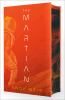
| The Martian |
 |
|
Andy Weir
|
|
| |
|
|
| |
|
NONFICTION |
| #1 (Last Week: - • Weeks on List: 1) |
| The Land And Its People |
 |
|
David Sedaris
Book list From Booklist, Copyright © American Library Association. Used with permission. 9780316264839 Sedaris can take the most mundane task, like buying new underwear, and make it seem like the most momentous endeavor anyone could hope to pursue. Even walking down the street and encountering a passing dog is cause for—pick one—wonder, outrage, delight, all of the above. In his latest essay collection, following Happy-Go-Lucky (2022), Sedaris embraces new travel adventures (lions pooping in Africa) and revisits old emotional upheavals (mom, dad, neighbors, boyfriends). He rises to the occasion of caregiver, reluctantly in some cases, extravagantly in others. Strangers both charm and confound him. Ditto celebrities and authors he encounters both in real life and on the page. What makes Sedaris so engaging as an essayist is his elevation of the commonplace to a state of exoticism. With his laconic delivery, Sedaris lures the reader into believing that the topic under discussion might be unremarkable, a you-and-me-in-this-together moment. But then, given Sedaris’ worldview and world weariness, eventually a knotty twist or spicy dash is delivered with the realization that Sedaris’ land is unparalleled, and its people are peerless.HIGH-DEMAND BACKSTORY: Sedaris fans will be queuing for this, craving new expressions of his signature wit and frankness. Publishers Weekly (c) Copyright PWxyz, LLC. All rights reserved 9780316264839 Humorist Sedaris (Happy-Go-Lucky) returns with a funny and heartfelt essay collection on friendship, family, and aging. Snapshots of his life with Hugh, his partner of more than 35 years, include his reluctance to assume the caretaker role after Hugh had hip-replacement surgery (he decries “the puffy, foot-tall toilet seat” Hugh needed after the operation, calling it “a specter of death no less chilling than the Grim Reaper himself”). The couple’s humorous dynamic is further showcased in “A Long Way Home,” which chronicles the time Sedaris invited a stranger on a seven-hour drive to keep Hugh company so Sedaris could lay in the back and indulge in his Duolingo addiction. Moments of sadness also bubble to the surface, such as the discovery that his childhood best friend, whom he hadn’t spoken to in 47 years, had died of throat cancer. The news leads Sedaris to reflect on the memories they shared and, even though they grew apart after a painful incident, conclude that his life is “different now, diminished” knowing his former friend is gone. Elsewhere, he discusses his eccentric family, his world travels, and unfortunate encounters with strangers. Throughout, Sedaris’s wit and keen awareness of life’s absurdities are on full display. These essays are among the best of his career. (May) Kirkus Copyright © Kirkus Reviews, used with permission. 9780316264839 In his 14th collection, our premier comic essayist does what he does best. The 28 essays collected here, most previously unpublished, along with some familiar to readers of theNew Yorker, are a welcome return to form for the much-awarded and much-loved humorist. His last two collections,Calypso (2018) andHappy-Go-Lucky (2022), were shadowed by the deaths of both his parents and his sister, Tiffany, the pandemic, and revelations about sexual abuse. These essays find the author back to thinking about his signature material: the little weirdnesses of living; his relationship with his husband, Hugh; the odd things people say and do; manners, bad and good; his travels and observations thereof; his quirky friendships; and his practice of walking 10,000 Apple Watch–monitored steps per day—all in his signature key of delightfully petty and wonderfully peevish. He might be the only person who jokes about how much fun it is to be obscenely wealthy, as in an essay where he reveals that he has a Paul Klee, a Franz Kline, and an Alexander Calder in the office where he writes; another where he buys a $2,400 cashmere cape for his sister, Gretchen, during a cancer scare, planning to inherit it back after her death; and several others in which his credit card appears as a deus ex machina to slice through various predicaments. A few essays dig back into his already-well-excavated childhood, including what is likely the sweetest essay he has ever written about his mother, “Cool Mom.” Here he applies seven principles he found in an article online (“A cool mom lets her kids see her try new things and take healthy risks”) to arrive at an emotional conclusion of rare poignancy. An essay recalling his teen volunteer job in a Raleigh, North Carolina, mental asylum makes one wonder if his hometown might someday consider erecting what would surely be an adorable and pilgrimage-worthy monument. Sedaris remains a national treasure. Copyright © Kirkus Reviews, used with permission. |
|
| |
| #2 (Last Week: 2 • Weeks on List: 19) |
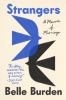
| Strangers |
 |
|
Belle Burden
Publishers Weekly (c) Copyright PWxyz, LLC. All rights reserved 9780593733318 Immigration lawyer Burden traces the exhilarating start and excruciating dissolution of her two-decade marriage in this bruising debut. Dividing the narrative into five acts, Burden recounts how, during the Covid pandemic, her husband of 20 years abruptly walked out on her and their three children without explanation. After he left, Burden desperately searched for answers, blaming herself and relitigating their idyllic courtship, looking for signs of his unhappiness in his occasional coldness and passing moments of rigidity. As her husband’s communication grew less frequent and he refused to see their children, she came to accept that she may have never truly known him. Then he initiated vicious divorce proceedings, transforming from “a benign stranger wandering out of my life” to “an adversary, determined to win.” After the divorce was finalized, Burden published a “Modern Love” essay in the New York Times, breaking an emotional dam within her and allowing her to finally move on from her recursive cycle of self-blame. With unsparing emotional clarity, Burden examines the often-baffling ways relationships can fall apart, and charts a path for people looking to reassemble their own lives. It’s a gut punch. Agent: Bretne Bloom, Book Group. (Jan.) Book list From Booklist, Copyright © American Library Association. Used with permission. 9780593733318 Burden’s debut memoir explores the emotional journey she embarked upon after her husband of two decades unexpectedly left her. Born into wealth and privilege, Burden’s charmed life seemed even more perfect after she met her future husband, James. The couple and their three children lived in a luxury Tribeca apartment and summered on Martha’s Vineyard, attending endless parties and joining an exclusive tennis club. But their idyllic life suddenly falls apart when Burden finds out that James is having an affair in the early days of the COVID-19 pandemic; shortly after, he announces he is leaving her. Left to pick up the pieces, she struggles to comprehend what went wrong and if she could be to blame. She no longer recognizes the man she bound her life to; he suddenly seems like a stranger. This detailed narrative of what happens after the end of a marriage recounts the many pathways Burden traveled to understand what happened and to begin building a new life. Kirkus Copyright © Kirkus Reviews, used with permission. 9780593733318 The story of a woman’s surprising divorce and her attempt to build anew. After Burden’s husband of 20 years walked out during the Covid-19 pandemic lockdown, her stepmother tried to explain the checkered response of their wealthy community: “There is no script for divorce, especially one as dramatic as yours.” The author’s debut expands and fine-tunes the piece she submitted to “Modern Love,” theNew York Times column, tracing her ex-husband James’ transformation from reliable partner to detached stranger to legal adversary. This more complete narrative reveals the amplified stakes surrounding the collapse of Burden’s marriage: financial, familial, and societal. The latter half of Burden’s book, which describes grappling with the logistics of disentangling from James and finding new independence, strength, and compassion, lacks some of the raw emotional vulnerability that marked herTimes contribution. But these chapters do expose the reaction of her wider circle, both the cold comments and the surprisingly supportive ones, and the expectations of women of her social status. (The author is a descendant of the Vanderbilts, with media founders, international style icons, and hedge fund executives scattered through her family tree.) It is difficult to completely erase all hints of society-page voyeurism—this is, after all, the world of keyed beach access passed down through generations, where private club membership is an item negotiated in marital separation. However, if Burden’s privilege remains in the frame, so does its attendant social elegance. In reclaiming her voice and story, Burden refuses to keep the silence and make the excuses as implicitly expected by society and explicitly demanded by her ex, and she remains charitable and gracious even when she does not have to be. This balance imbues her story with a certain power as both the missing script for would-be commenters and a radical extension of kindness toward herself. A measured, empathetic, and modern response to an enraging callousness. Copyright © Kirkus Reviews, used with permission. |
|
| |
| #3 (Last Week: - • Weeks on List: 1) |
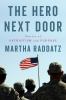
| The Hero Next Door |
 |
|
Martha Raddatz
Kirkus Copyright © Kirkus Reviews, used with permission. 9781668093801 Longtime ABC news correspondent Raddatz chronicles ordinary people in extraordinary circumstances. Heroes, it’s said, are the people who run toward danger instead of away from it. To this Raddatz rejoins, “The one sure way to spot a hero may be to look for the ones who insist they are not.” In this series of portraits of such heroes, most connected to the “forever wars” in Iraq and Afghanistan, she finds plenty to admire, even as those men and women protest that “I was just doing my job” and “It wasn’t me alone.” One of her subjects, for instance, is a veteran of a “pararescue jumper” unit whose job it was to evacuate wounded soldiers from the battlefield, “often under the most dangerous conditions imaginable.” Each operation in the field put him at terrible risk, and perhaps none more so than the rescue of an officer who had suffered a bullet to the head and a fall from a cliff—just one of 13 missions the team ran that day. Later, the rescuer sought out the rescued to check on his progress, and a great friendship formed. Friendship and comradeship is a constant theme: In another portrait, four survivors of a bloody ambush in Iraq form a lifelong bond after having all experienced the bewildering transition from military to civilian life: “I’m just another dude walking down the street, trying to pay his fucking bills.” Not all of Raddatz’s heroes are combatants: One is a neurosurgeon who, after three decades of treating head wounds in field hospitals, is now volunteering his services in Ukraine. Heroic in their own way, too, are the mothers of soldiers grievously wounded in battle, doing their best to help their children recover, and the ordinary people who volunteer their time and resources to staff suicide hotlines, donate medical supplies, and counsel other veterans on the road to recovery. Inspiring profiles in courage for our time. Copyright © Kirkus Reviews, used with permission. |
|
| |
| #4 (Last Week: - • Weeks on List: 1) |
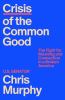
| Crisis Of The Common Good |
 |
|
Chris Murphy
Publishers Weekly (c) Copyright PWxyz, LLC. All rights reserved 9780374621117 Connecticut senator Murphy (The Violence Inside Us) diagnoses the causes of America’s growing alienation and economic disparity and proposes solutions in this sharp but uneven analysis. He opens with a surreal scene—his 14-year-old son’s hockey league, now “backed by private equity investment,” banned parents from filming games in favor of subscribing to their “$25 to 50 a month” streaming service. It’s an apt jumping-off point for Murphy’s larger argument that monied interests and “me-first” individualism have left citizens “fragmented and spiritually adrift.” The root of this problem, he asserts, lies in six “false cults,” ranging from the cult of profit, with corporations solely focused on shareholder gains, to the cult of credentials, leading to a “growing education divide.” Murphy’s critiques are most incisive when bolstered by his own experiences, like a chilling meeting with OpenAI’s Sam Altman, who attempted to assuage Murphy’s AI skepticism by hyping how “AI will replace human friendship.” His historical analysis is shakier—pointing to 1970s auto manufacturing as exemplary of worker power strikes an odd note, even with an acknowledgment of the industry’s “racial tension”—and his policy solutions are a rocky mix of progressive standards such as antitrust reforms, ambitious concepts like a constitutional amendment to ban dark money from elections, and strangely specific ideas like ending the use of Clear, a biometric identity verification system, at airports. It’s a promising agenda that needs more refinement. (May) |
|
| |
| #5 (Last Week: - • Weeks on List: 1) |
| All We Say |
 |
|
Ben Rhodes
|
|
| |
| #6 (Last Week: 10 • Weeks on List: 3) |
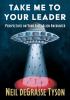
| Take Me To Your Leader |
 |
|
Neil deGrasse Tyson
Kirkus Copyright © Kirkus Reviews, used with permission. 9781668249970 Close encounters of the hilarious kind. Tyson—an astrophysicist and popular science communicator (Astrophysics for People in a Hurry, 2017), director of the Hayden Planetarium at the American Museum of Natural History, and host ofStarTalk—thinks that when it comes to aliens, we suffer from a lack of imagination. We share 25% of our genes with bananas—our last common ancestor having lived one and a half billion years ago (“a time in Earth’s tree of life that we could justifiably call ‘the banana split’”)—yet aliens, with whom we share no genes (who may not evenhave genes) are typically shown as looking far more similar to us than bananas do. Who’s to say they don’t look like octopuses or gaseous clouds? What if they’re the size of fleas? (Could a flea-sized intelligence build and operate an intergalactic spacecraft?) Probably they don’t have the classic ginormous eyes—if they have eyes at all—since big eyes leave less room for big brains, which, presumably, they have if they’ve made it to our corner of the Milky Way. They might not even be made of ordinary matter. If you meet an alien, Tyson suggests tossing a coin or other small object in their direction before shaking tentacles. “If, upon catching it, the Alien spontaneously explodes with the power of two hundred million sticks of dynamite, then it was made of antimatter. Otherwise, you’re good to go.” And that’s not even the most exotic possibility. “The coolest thing ever,” Tyson insists, “would be if Aliens occupied more spatial dimensions than we do.” They’d seem to appear as if from nowhere and would be able to see the inner contents of our bodies, no probes required. Writing in his usual breezy style, the author draws endless examples from science fiction and pop culture, his physics punctuated with all the trademarks his readers have come to expect: an unwavering belief in rationality, a disdain for belief in general, well-timed humor, the obligatory Pluto diss. His imaginings of the strangeness of alien life have the dizzying effect of making us look back at life on Earth through a kind of alien lens, through which our own bodies, customs, and concerns seem strange in their own right, right down to our obsession with aliens, conspiracy theories, and UFOs, all of which say more about us than them—about our yearning for something bigger, our curiosity about the cosmos, our questionable understanding of physics, and our front-facing eyes that so easily, and so wondrously, look up. A fun romp through the possibilities of alien lifeforms and the physics that might allow them to land in our backyards. Copyright © Kirkus Reviews, used with permission. |
|
| |
|
|
| |
|
|
| |
| #9 (Last Week: - • Weeks on List: 26) |
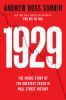
| 1929 |
 |
|
Andrew Ross Sorkin
Library Journal (c) Copyright Library Journals LLC, a wholly owned subsidiary of Media Source, Inc. No redistribution permitted. 9780593296967 Journalist Sorkin has written a vivid account of the events leading to the Great Stock Market Crash of 1929, which caused financial chaos, wiped out fortunes, and led to the Great Depression. He also covers the aftermath, Roosevelt's New Deal, and resulting financial reforms. Sorkin has meticulously researched the crash, drawing on archival material, depositions, letters, diaries, oral histories, and, most notably, the unpublished memoir of a Wall Street insider. The book offers vivid accounts and viewpoints on pivotal characters during this time in history, including J.P. Morgan and J.P. Morgan Jr., Richard Whitney, Franklin Delano Roosevelt, Andrew Mellon, Senator Carter Glass (cosponsor of the Glass-Steagall Act), and Ferdinand Pecora (called "the Hell Hound of Wall Street"). The investigations and hearings on the crash led to reforms in the stock market, ultimately contributing to the establishment of the Securities and Exchange Commission. The book includes extensive bibliographic notes and references. VERDICT Sorkin's first book since the 2009 bestseller Too Big To Fail is a historical blueprint for understanding the past and present financial situations in the U.S. Highly recommended and essential reading.—Lucy Heckman Kirkus Copyright © Kirkus Reviews, used with permission. 9780593296967 An affluent age abruptly ends. Sorkin’s chronicle of economic calamity is well-versed in the language of high finance and laser-focused on the rich and influential. Bankers and lawmakers share the limelight with actors and statesmen seeking Wall Street wealth. The countless unsung Americans wrecked by the October 1929 stock market crash and its aftermath are seldom heard from. This may frustrate some readers, but it’s not an oversight, as Sorkin unapologetically—and not unreasonably—opts to concentrate on power players. As theNew York Times columnist and CNBC host explains, the “bloodbath” was triggered by chicanery, “easy credit” and the market’s “general opacity.” During the run-up to the crash, bankers and affluent investors formed “stock pools.” These were a legal but “devious and unfair” way to furtively accumulate “shares in a given company,” “artificially” raising the stock’s value. Some market speculators tried to boost profits by “luring small-time speculators into” their “elaborate market schemes.” By the early 1930s, thousands of banks had failed, leaving many millions unemployed, homeless, or hungry. It’s a feature, not a bug, that this large group of people remains in the background. Sorkin announces this narrative choice at the outset, presenting a cast list dominated by bankers, politicians, regulators, and other well-connected sorts—those whose fingerprints were on the collapse. His leading figures are prominent men whom history has rendered one-dimensional, verdicts Sorkin aims to reveal as incomplete. Banker Charles Mitchell’s maneuvering got him in legal trouble and was blamed for the crash, but Sorkin suggests he merits “more nuanced consideration.” Senator Carter Glass was celebrated for 1933 legislation that protected less-wealthy bank customers by disentangling commercial and investment banking. But he only grudgingly OK’d “key elements of his own bill.” For their part, Groucho Marx and Winston Churchill took a bath when the crash came. It’s a narrow segment of society but one whose experiences Sorkin capably recounts. A nimble history of the stock market’s collapse centers on the upper crust. Copyright © Kirkus Reviews, used with permission. |
|
| |
| #10 (Last Week: 9 • Weeks on List: 8) |
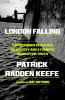
| London Falling |
 |
|
Patrick Radden Keefe
Publishers Weekly (c) Copyright PWxyz, LLC. All rights reserved 9780385548533 “The truth is, everybody lies,” observes New Yorker staff writer and National Book Critics Circle award winner Keefe (Say Nothing) in this gripping investigation into a young man’s mysterious death in 2019 London. Surveillance footage shows Zac Brettler, 19, jumping from a fourth-story apartment balcony into the Thames, apparently fleeing for his life. The man living in the apartment, a middle-aged gangland enforcer named Verinder Sharma, died a year later, stymieing Scotland Yard’s criminal investigation. The only other witness, a businessman named Akbar Shamji, was caught lying to the police and offered no help beyond an initial bombshell revelation, disclosed to Zac’s grieving parents shortly after his death, that Zac had for some reason fooled him and Verinder into thinking he was the son of a Russian oligarch. In between piecing together the facts, Keefe zooms out, vividly portraying the morass of the modern London underworld, a “twenty-four-hour laundromat for dirty money... full of crooks with pretensions to legitimacy and businessmen who seem a little crooked.” Keefe’s approach is profoundly humane, particularly in his intimate interviews with Zac’s parents, Matthew and Rachelle, who convey a deep desire to understand their late son. Despite the murky material, Keefe arrives at an artful and clarifying explanation. It’s a remarkable new turn for the celebrated author. Agent: Tina Bennett, Bennett Literary. (Apr.) Kirkus Copyright © Kirkus Reviews, used with permission. 9780385548533 A tragic death in a transformed city. Keefe, the author of some of this century’s finest nonfiction, has crafted another masterwork. This is a penetrating portrait of a young man destroyed by malignant influences given free rein in a global hub of capitalist excess. In November 2019, 19-year-old Zac Brettler leapt from the fifth-floor balcony of a luxury apartment in London, falling to his death in the Thames. But this was no straightforward suicide. Brettler, well-off but not rich, had become fixated on opulence, spending nights on social media admiring the “glitzy, mercenary, aspirational culture” embodied by foreign billionaires who’d bought mansions and soccer clubs in his city. Hoping to join their number, he contrived a false identity that led to his undoing. Posing as “Zac Ismailov,” a Russian oligarch’s son, Brettler befriended shady entrepreneurs. At 18, he showed his real father—who works in finance but isn’t “flashy,” Keefe writes—an authentic-looking bank statement for a personal account holding about $1 million. Keefe uncovers details that suggest Brettler jumped to escape from one of his new purported friends, a “violent” extortionist. Keefe might be our sharpest chronicler of the intersection of criminal opportunism and institutional fecklessness. The author finds witnesses and writes of the “bizarre passivity of Scotland Yard,” decimated by budget cuts. He tallies the harm done by decades of deregulation in London, where the financial sector is stacked with “professional facilitators eager to help protect or conceal a dubious fortune.” And he closely observes his real-life characters, sensitively showing the very different ways in which Brettler’s parents processed their pain. This is powerful reporting, a potential classic about the dangerous allure of a city remade as “a twenty-four-hour laundromat for dirty money.” An exemplary account of naοvetι, wealth, and menace, impeccably told by a top-notch journalist. Copyright © Kirkus Reviews, used with permission. |
|
| |
|