|
|
| ALA Best Books for Young Adults | 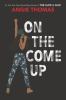 | | On the Come Up
by Angie Thomas
Publishers Weekly Thomas's highly anticipated follow up to The Hate U Give returns to Garden Heights, but her new protagonist, 16-year-old Brianna Jackson, faces different challenges than the previous novel's Starr Carter. Bri's mother, Jayda, a recovering crack addict, has lost her job. The rent is late, the heat has been shut off, and Jayda must choose between staying in college and feeding her kids, because welfare benefits don't include food stamps for unemployed students. Bri attends an arts high school, and she dreams of making it big rapping-a talent she inherited from her father, a neighborhood legend who was shot to death when Bri was four. She begins to gain notice in the local music scene, but her success draws the unwanted attention of the gang suspected of killing her father. At the same time, an incident at school connects her with activists. Bri's artful rhymes convey her fears, frustrations, determination to challenge societal stereotypes, and growing awareness of her own talents. As in The Hate U Give, Thomas introduces readers to an unforgettable cast of characters who seek to thrive in close-knit neighborhoods that are also shaped by violence and systemic racism. Bri is a fully realized character who is both sympathetic and, occasionally, maddeningly impulsive, and the well-crafted dialogue, with some laugh-out-loud shade throwing, propels the dramatic plot. Ages 14-up. (Feb.) © Copyright PWxyz, LLC. All rights reserved. (c) Copyright PWxyz, LLC. All rights reserved School Library Journal Gr 8 Up-Aspiring rapper Bri records "On the Come Up" to protest the racial profiling and assault she endured at the hands of white security guards at her high school. The song goes viral, and Bri seizes the opportunity to follow in the footsteps of her late father and lift her family out of poverty, but her loved ones worry, especially when some listeners paint her as an angry black girl inciting violence. Tension mounts as Bri's mother loses her job, Bri's relationship with her beloved aunt and musical mentor splinters, and a new manager dangles the prospect of fame and wealth-at a price. Set in the same neighborhood as Thomas's electrifying The Hate U Give, this visceral novel makes cogent observations about the cycle of poverty and the inescapable effects of systemic racism. Though the book never sands over the rough realities of Garden Heights, such as gang warfare, it imbues its many characters with warmth and depth. While acknowledging that society is quick to slap labels onto black teens, the author allows her heroine to stumble and fall before finding her footing and her voice. VERDICT Thomas once again fearlessly speaks truth to power; a compelling coming-of-age story for all teens.-Mahnaz Dar, School Library Journal © Copyright 2019. Library Journals LLC, a wholly owned subsidiary of Media Source, Inc. No redistribution permitted. (c) Copyright Library Journals LLC, a wholly owned subsidiary of Media Source, Inc. No redistribution permitted. Book list Thomas follows up her blockbuster, The Hate U Give (2017), with a sophomore novel that's just as explosive. On the Come Up tells the story of talented Bri, daughter of a deceased underground rapper, who's pursuing her own rap career. Bri is more than her dreams of making it out of the hood and reaching rap stardom; she is a girl who loves her family and friends fiercely. Bri's chance at fame comes after a rap battle in which the song she pens garners massive attention. When Bri's mother loses her job, Bri's rap ambitions become more crucial than ever. They could be her and her family's ticket to a better life unthreatened by poverty. Bri is a refreshingly realistic character with trials and triumphs, strengths and flaws. She's also a teen with a traumatic past who is still going through things in the present. She still, however, manages to find the beauty and joy in life despite her tribulations, and this is where On the Come Up truly shines in its exploration of Bri's resilience, determination, and pursuit of her dreams. In this splendid novel, showing many facets of the Black identity and the Black experience, including both the highs and the lows of middle-class and poor Black families, Thomas gives readers another dynamic protagonist to root for. High-Demand Backstory: Thomas' debut, The Hate U Give, might ring a bell? She had a long-term stay on the New York Times best-seller list for her first novel, and the hype for her second is damn near deafening.--Enishia Davenport Copyright 2019 Booklist From Booklist, Copyright © American Library Association. Used with permission. Horn Book Sixteen-year-old Bri attends a public arts high school and dreams of being a rapper like her late father. After winning a rap battle in her neighborhood, doors start to open--but at a price Bri isn't sure she's willing to pay. Thomas's sharp, even piercing, characterization includes a remarkably well-rounded cast. A richly woven love letter to hip-hop, with Bri's lyrics and her thought process behind them included throughout. (c) Copyright 2019. The Horn Book, Inc., a wholly owned subsidiary of Media Source, Inc. No redistribution permitted. (c) Copyright The Horn Book, Inc., a wholly owned subsidiary of Media Source, Inc. No redistribution permitted. Kirkus This honest and unflinching story of toil, tears, and triumph is a musical love letter that proves literary lightning does indeed strike twiceThomas' (The Hate U Give, 2017) sophomore novel returns to Garden Heights, but while Brianna may live in Starr's old neighborhood, their experiences couldn't differ more. Raised by a widowed mother, a recovering drug addict, Bri attends an arts school while dreaming of becoming a famous rapper, as her father was before gang violence ended his life. Her struggles within the music industry and in school highlight the humiliations and injustices that remain an indelible part of the African-American story while also showcasing rap's undeniable lyrical power as a language through which to find strength. Bri's journey is deeply personal: small in scope and edgy in tone. When Bri raps, the prose sings on the page as she uses it to voice her frustration at being stigmatized as "hood" at school, her humiliation at being unable to pay the bills, and her yearning to succeed in the music world on her own merit. Most importantly, the novel gives voice to teens whose lives diverge from middle-class Americana. Bri wrestles with parent relationships and boy dramaand a trip to the food bank so they don't starve during Christmas. The rawness of Bri's narrative demonstrates Thomas' undeniable storytelling prowess as she tells truths that are neither pretty nor necessarily universally relatable.A joyous experience awaits. Read it. Learn it. Love it. (Fiction. 13-adult) Copyright Kirkus Reviews, used with permission. Copyright © Kirkus Reviews, used with permission. |
| ALA Notable Books for Children | 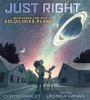 | | Just Right: Searching for the Goldilocks Planet.
by Curtis Manley
Publishers Weekly Readers join a brown-skinned girl with a polka-dotted backpack as she asks questions about the stars and visits a space museum, where she watches exoplanets careen overhead in a planetarium. In sweeping, inky art, Lanan captures the child's dawning awareness of the vastness of the universe. Manley's writing swings gracefully between factual descriptions ("Earth orbits in our solar system's 'habitable zone''") and more lyrical observations: "All stars twinkle, but some stars also seem to wink at us... as if saying, 'I know a secret.''" Back home after the museum trip, the child considers the types of life-forms that might be out there. Richly informative prose and intimate yet expansive art show a child's contagious enthusiasm for the book's subject. Includes a timeline of astronomical discoveries and suggestions for further reading. Ages 5-9. (Jan.) © Copyright PWxyz, LLC. All rights reserved. (c) Copyright PWxyz, LLC. All rights reserved School Library Journal Gr 2-5-Beginning with the insights of astronomers such as Lucretius and Giordano Bruno and continuing with the observations of a fictional young black girl from the present day, this illuminating book examines the possibility of life on other planets. Manley presents scientific certainties and theories alongside the child and her family's trip to a museum. One spread features text about Earth-like exoplanets paired with illustrations of the girl gazing off open-mouthed at the promising habitable planet surface that exists, for her, beyond the walls of the museum. On some pages, she muses, "If someday we do find evidence of beings like ourselves, what could we do? .We could send them art and poetry and music." The enthusiastic main character lightens what could be weighty scientific information, providing an entry point for newcomers. Lanan's pleasing, watercolorlike artwork moves between expansive visions of outer space and panels that highlight key concepts. VERDICT An ideal addition for libraries building or updating STEAM collections.-Elaine Fultz, Madison Jr. Sr. High School, Middletown, OH © Copyright 2019. Library Journals LLC, a wholly owned subsidiary of Media Source, Inc. No redistribution permitted. (c) Copyright Library Journals LLC, a wholly owned subsidiary of Media Source, Inc. No redistribution permitted. Kirkus A young girl looks out her window, pondering the universe. A subsequent family trip to the planetarium gives her a lot to think about.Are we alone in the universe? Are there other "Goldilocks planets" out there capable of sustaining life, planets that are "not too hot and not too cold, not too big and not too small, not too soft and not too hard" but "just right"? Older adult readers might hear the voice of Carl Sagan in the narrative, an authoritative, planetarium-movie voice explaining the universe with a focus on "exoplanets," planets that orbit stars outside of our solar system. Kids may imagine Neal DeGrasse Tyson. Woven through the text are the twin narratives of the girl and her family's visit to the planetarium and its "Searching for Exoplanets" exhibition. The illustrations, suffused with glowing light, are dynamically varied, including a colorful double-page spread of the Milky Way galaxy, panels carrying information, fanciful visions of other worlds, and an all-black spread with just one stark sentence in white: "Or maybe it's like nothing we can even imagine." Lanan effectively balances the girl's visual narrative with the heavier scientific exposition of the text. The girl, who has exuberantly kinky hair, and her family present black; other planetarium guests are a diverse group. Thorough backmatter includes books, websites, astronomy clubs, and various websites for further exploration.An attractive and informative volume for young stargazers. (Informational picture book. 6-10) Copyright Kirkus Reviews, used with permission. Copyright © Kirkus Reviews, used with permission. Horn Book Manley presents a smart, careful, and thorough discussion of exoplanets. Lanan's illustrations take the concepts to the next level; the choices of scale, color, and detail in her planetary landscapes make visible the text's content. The clever use of a parallel visual narrative, which features a (brown-skinned) girl and her family visiting a planetarium, situates the images of possible other life-supporting worlds in that character's imagination. Timeline, websites. Bib. (c) Copyright 2019. The Horn Book, Inc., a wholly owned subsidiary of Media Source, Inc. No redistribution permitted. (c) Copyright The Horn Book, Inc., a wholly owned subsidiary of Media Source, Inc. No redistribution permitted. Book list This is an oversize nonfiction picture book about the search for life on exoplanets planets beyond our solar system. The text continually poses open-ended questions ( When you look toward the stars, do you ever wonder if anyone is looking back? ) and presents kid-friendly scenarios that help young readers grasp concepts. The text is woven around an African American girl and her family's visit to a space museum, and incorporates information about astronomy, giant telescopes, types of exoplanets, how to find them, and ongoing space research. Of course, if we do someday find a planet that's just right (meaning, it has all the ingredients necessary to sustain human life), that just opens up another batch of questions: Should we stay quiet and hide from them? If we do send a message, what should we say? The illustrations, which employ deep, night-sky backgrounds, complement the text, whether reinforcing content or advancing the action. This is the best kind of science writing a book that offers as many questions as answers. Aspiring astronomers will love it.--Kathleen McBroom Copyright 2019 Booklist From Booklist, Copyright © American Library Association. Used with permission. Publishers Weekly Readers join a brown-skinned girl with a polka-dotted backpack as she asks questions about the stars and visits a space museum, where she watches exoplanets careen overhead in a planetarium. In sweeping, inky art, Lanan captures the child's dawning awareness of the vastness of the universe. Manley's writing swings gracefully between factual descriptions ("Earth orbits in our solar system's 'habitable zone''") and more lyrical observations: "All stars twinkle, but some stars also seem to wink at us... as if saying, 'I know a secret.''" Back home after the museum trip, the child considers the types of life-forms that might be out there. Richly informative prose and intimate yet expansive art show a child's contagious enthusiasm for the book's subject. Includes a timeline of astronomical discoveries and suggestions for further reading. Ages 5-9. (Jan.) © Copyright PWxyz, LLC. All rights reserved. (c) Copyright PWxyz, LLC. All rights reserved School Library Journal Gr 2-5-Beginning with the insights of astronomers such as Lucretius and Giordano Bruno and continuing with the observations of a fictional young black girl from the present day, this illuminating book examines the possibility of life on other planets. Manley presents scientific certainties and theories alongside the child and her family's trip to a museum. One spread features text about Earth-like exoplanets paired with illustrations of the girl gazing off open-mouthed at the promising habitable planet surface that exists, for her, beyond the walls of the museum. On some pages, she muses, "If someday we do find evidence of beings like ourselves, what could we do? .We could send them art and poetry and music." The enthusiastic main character lightens what could be weighty scientific information, providing an entry point for newcomers. Lanan's pleasing, watercolorlike artwork moves between expansive visions of outer space and panels that highlight key concepts. VERDICT An ideal addition for libraries building or updating STEAM collections.-Elaine Fultz, Madison Jr. Sr. High School, Middletown, OH © Copyright 2019. Library Journals LLC, a wholly owned subsidiary of Media Source, Inc. No redistribution permitted. (c) Copyright Library Journals LLC, a wholly owned subsidiary of Media Source, Inc. No redistribution permitted. Kirkus A young girl looks out her window, pondering the universe. A subsequent family trip to the planetarium gives her a lot to think about.Are we alone in the universe? Are there other "Goldilocks planets" out there capable of sustaining life, planets that are "not too hot and not too cold, not too big and not too small, not too soft and not too hard" but "just right"? Older adult readers might hear the voice of Carl Sagan in the narrative, an authoritative, planetarium-movie voice explaining the universe with a focus on "exoplanets," planets that orbit stars outside of our solar system. Kids may imagine Neal DeGrasse Tyson. Woven through the text are the twin narratives of the girl and her family's visit to the planetarium and its "Searching for Exoplanets" exhibition. The illustrations, suffused with glowing light, are dynamically varied, including a colorful double-page spread of the Milky Way galaxy, panels carrying information, fanciful visions of other worlds, and an all-black spread with just one stark sentence in white: "Or maybe it's like nothing we can even imagine." Lanan effectively balances the girl's visual narrative with the heavier scientific exposition of the text. The girl, who has exuberantly kinky hair, and her family present black; other planetarium guests are a diverse group. Thorough backmatter includes books, websites, astronomy clubs, and various websites for further exploration.An attractive and informative volume for young stargazers. (Informational picture book. 6-10) Copyright Kirkus Reviews, used with permission. Copyright © Kirkus Reviews, used with permission. Horn Book Manley presents a smart, careful, and thorough discussion of exoplanets. Lanan's illustrations take the concepts to the next level; the choices of scale, color, and detail in her planetary landscapes make visible the text's content. The clever use of a parallel visual narrative, which features a (brown-skinned) girl and her family visiting a planetarium, situates the images of possible other life-supporting worlds in that character's imagination. Timeline, websites. Bib. (c) Copyright 2019. The Horn Book, Inc., a wholly owned subsidiary of Media Source, Inc. No redistribution permitted. (c) Copyright The Horn Book, Inc., a wholly owned subsidiary of Media Source, Inc. No redistribution permitted. Book list This is an oversize nonfiction picture book about the search for life on exoplanets planets beyond our solar system. The text continually poses open-ended questions ( When you look toward the stars, do you ever wonder if anyone is looking back? ) and presents kid-friendly scenarios that help young readers grasp concepts. The text is woven around an African American girl and her family's visit to a space museum, and incorporates information about astronomy, giant telescopes, types of exoplanets, how to find them, and ongoing space research. Of course, if we do someday find a planet that's just right (meaning, it has all the ingredients necessary to sustain human life), that just opens up another batch of questions: Should we stay quiet and hide from them? If we do send a message, what should we say? The illustrations, which employ deep, night-sky backgrounds, complement the text, whether reinforcing content or advancing the action. This is the best kind of science writing a book that offers as many questions as answers. Aspiring astronomers will love it.--Kathleen McBroom Copyright 2019 Booklist From Booklist, Copyright © American Library Association. Used with permission. |
| Caldecott Medal Winners | 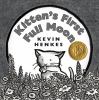 | | Kittens First Full Moon
by Kevin Henkes
School Library Journal
: PreS-K-An irresistible offering from the multifaceted Henkes. The spare and suspense-filled story concerns a kitten that mistakes the moon for a bowl of milk. When she opens her mouth to lick the treat, she ends up with a bug on her tongue. Next, she launches herself into the air, paws reaching out for the object of her desire, only to tumble down the stairs, "bumping her nose and banging her ear and pinching her tail. Poor Kitten." Again and again, the feline's persistent attempts to reach her goal lead to pain, frustration, and exhaustion. Repetitive phrases introduce each sequence of desire, action, and consequence, until the animal's instincts lead her home to a satisfying resolution. Done in a charcoal and cream-colored palette, the understated illustrations feature thick black outlines, pleasing curves, and swiftly changing expressions that are full of nuance. The rhythmic text and delightful artwork ensure storytime success. Kids will surely applaud this cat's irrepressible spirit. Pair this tale with Frank Asch's classic Moongame (S & S, 1987) and Nancy Elizabeth Wallace's The Sun, the Moon and the Stars (Houghton, 2003) for nocturnal celebrations. -Wendy Lukehart, Washington DC Public Library Copyright © Reed Business Information, a division of Reed Elsevier Inc. All rights reserved. Distributed by Syndetic Solutions Inc. Terms
|
| Newbery Medal Winners | 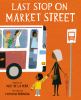 | | Last Stop on Market Street
by Matt De La Pena
Publishers Weekly Like still waters, de la Peña (A Nation's Hope) and Robinson's (Gaston) story runs deep. It finds beauty in unexpected places, explores the difference between what's fleeting and what lasts, acknowledges inequality, and testifies to the love shared by an African-American boy and his grandmother. On Sunday, CJ and Nana don't go home after church like everybody else. Instead, they wait for the Market Street bus. "How come we don't got a car?" CJ complains. Like many children his age, CJ is caught up in noticing what other people have and don't have; de la Peña handles these conversations with grace. "Boy, what do we need a car for?" she responds. "We got a bus that breathes fire, and old Mr. Dennis, who always has a trick for you." (The driver obliges by pulling a coin out of CJ's ear.) When CJ wishes for a fancy mobile music device like the one that two boys at the back of the bus share, Nana points out a passenger with a guitar. "You got the real live thing sitting across from you." The man begins to play, and CJ closes his eyes. "He was lost in the sound and the sound gave him the feeling of magic." When the song's over, the whole bus applauds, "even the boys in the back." Nana, readers begin to sense, brings people together wherever she goes. Robinson's paintings contribute to the story's embrace of simplicity. His folk-style figures come in a rainbow of shapes and sizes, his urban landscape accented with flying pigeons and the tracery of security gates and fire escapes. At last, CJ and Nana reach their destination-the neighborhood soup kitchen. Nana's ability to find "beautiful where he never even thought to look" begins to work on CJ as the two spot people they've come to know. "I'm glad we came," he tells her. Earlier, Nana says that life in the deteriorated neighborhood makes people "a better witness for what's beautiful." This story has the same effect. Ages 3-5. Agent: Steven Malk, Writers House. (Jan.) © Copyright PWxyz, LLC. All rights reserved. (c) Copyright PWxyz, LLC. All rights reserved Book list CJ and his nana depart church and make it to the bus stop just in time to avoid an oncoming rain shower. They board the bus, and while CJ is full of questions and complaints (why don't they have a car? why must they make this trip every week? and so forth), Nana's resolute responses articulate the glories of their rich, vibrant life in the city, as presented by the bus' passengers and passages. A tattooed man checks his cell phone. An older woman keeps butterflies in a jar. A musician tunes and plays his guitar. At last the pair arrive at the titular destination and proceed to the soup kitchen where, upon recognizing friendly faces, CJ is glad they came to help. Robinson's bright, simple, multicultural figures, with their rounded heads, boxy bodies, and friendly expressions, contrast nicely with de la Peña's lyrical language, establishing a unique tone that reflects both CJ's wonder and his nana's wisdom. The celebratory warmth is irresistible, offering a picture of community that resonates with harmony and diversity.--Barthelmess, Thom Copyright 2015 Booklist From Booklist, Copyright © American Library Association. Used with permission. School Library Journal K-Gr 2-After church on Sundays, CJ and his nana wait for the bus. It's a familiar routine, but this week CJ is feeling dissatisfied. As they travel to their destination, the boy asks a series of questions: "How come we gotta wait for the bus in all this wet?" "Nana, how come we don't got a car?" "How come we always gotta go here after church?" CJ is envious of kids with cars, iPods, and more freedom than he has. With each question, Nana points out something for CJ to appreciate about his life: "Boy, what do we need a car for? We got a bus that breathes fire." These gentle admonishments are phrased as questions or observations rather than direct answers so that CJ is able to take ownership of his feelings. After they exit the bus, CJ wonders why this part of town is so run-down, prompting Nana to reply, "Sometimes when you're surrounded by dirt, CJ, you're a better witness for what's beautiful." The urban setting is truly reflective, showing people with different skin colors, body types, abilities, ages, and classes in a natural and authentic manner. Robinson's flat, blocky illustrations are simple and well composed, seemingly spare but peppered with tiny, interesting details. Ultimately, their destination is a soup kitchen, and CJ is glad to be there. This is an excellent book that highlights less popular topics such as urban life, volunteerism, and thankfulness, with people of color as the main characters. A lovely title.-Anna Haase Krueger, Ramsey County Library, MN (c) Copyright 2014. Library Journals LLC, a wholly owned subsidiary of Media Source, Inc. No redistribution permitted. (c) Copyright Library Journals LLC, a wholly owned subsidiary of Media Source, Inc. No redistribution permitted. |
| Oprah's Book Club | 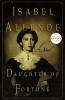 | | Daughter of Fortune
by Isabel Allende
Publishers Weekly: Allende expands her geographical boundaries in this sprawling, engrossing historical novel flavored by four cultures--English, Chilean, Chinese and American--and set during the 1849 California Gold Rush. The alluring tale begins in Valpara so, Chile, with young Eliza Sommers, who was left as a baby on the doorstep of wealthy British importers Miss Rose Sommers and her prim brother, Jeremy. Now a 16-year-old, and newly pregnant, Eliza decides to follow her lover, fiery clerk Joaqu n Andieta, when he leaves for California to make his fortune in the gold rush. Enlisting the unlikely aid of Tao Chi'en, a Chinese shipboard cook, she stows away on a ship bound for San Francisco. Tao Chi'en's own story--richly textured and expansively told--begins when he is born into a peasant family and sold into slavery, where it is his good fortune to be trained as a master of acupuncture. Years later, while tending to a sailor in colonial Hong Kong, he is shanghaied and forced into service at sea. During the voyage with Eliza, Tao nurses her through a miscarriage. When they disembark, Eliza is disguised as a boy, and she spends the next four years in male attire so she may travel freely and safely. Eliza's search for Joaqu n (rumored to have become an outlaw) is disappointing, but through an eye-opening stint as a pianist in a traveling brothel and through her charged friendship with Tao, now a sought-after healer and champion of enslaved Chinese prostitutes, Eliza finds freedom, fulfillment and maturity. Effortlessly weaving in historical background, Allende (House of the Spirits; Paula) evokes in pungent prose the great melting pot of early California and the colorful societies of Valpara so and Canton. A gallery of secondary characters, developed early on, prove pivotal to the plot. In a book of this scope, the narrative is inevitably top-heavy in spots, and the plot wears thin toward the end, but this is storytelling at its most seductive, a brash historical adventure. Major ad/promo; BOMC dual main selection; 11-city author tour. (Oct.) FYI: This book will also be released in a HarperLibros Spanish edition, Hija del la Fortuna (ISBN 0-06-019492-8). Copyright 1999 Cahners Business Information, Inc. Distributed by Syndetic Solutions Inc. Terms
|
|

