|
|
| ALA Best Books for Young Adults | 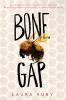 | | Bone Gap
by Laura Ruby
Book list *Starred Review* For all appearances, Bone Gap is a sluggish farming town that most people want to escape, a place with gaps just wide enough for people to slip away . . . leaving only their stories behind. That's what folks assumed happened when Roza disappeared from the state fair, but 17-year-old Finn knows better. He's the only one who sees her leave, but his description of her abductor that he moves like a shivering cornstalk doesn't help the police, and the people of Bone Gap resentfully believe that Finn helped the beloved girl disappear because she wanted to. She arrived just as enigmatically as she left: she appeared one night in Finn and Sean's barn, beaten and cagey and unwilling to see a doctor, but the brothers didn't leer at her like most men, so she stuck around. Even though the people of Bone Gap are suspicious of outsiders, they were quickly taken by the beautiful Polish girl with an uncanny feel for dirt and plants and livestock, but none so much as Finn's brother, Sean, who seems to lose a piece of himself when she disappears. Her departure drives a wedge between the brothers Finn feels like Sean isn't doing enough to look for her, and Sean thinks Finn is hiding something about the night she left. Most of Bone Gap sides with Sean, and Finn, who has always been strange, feels like more of an outsider than ever. Finn keeps searching, however, and odd-looking Petey, the fiery daughter of the local beekeeper, is the only who believes him. She's just as much of an outsider as Finn, especially after ugly, untrue rumors about Petey and a boy at a party spread in that pernicious small-town way. But in spite of the rumors, Finn is deeply drawn to her and her wide-set, bee-like eyes. Even after the strange way Finn stares at her, Petey still thinks he's beautiful. Their endearing romance is free of sticky sweetness, and together they discover that there's more to their town and Finn than meets the eye. It's the gaps in Bone Gap that give it its name, but there are no cliffs or ravines there. Rather, there are gaps in the world. In the space of things. Those gaps in the town are loose enough that a person can fall clear through to the other side of reality, and that's precisely where the cornstalk man took Roza. At first, he keeps her in a normal suburban house, but after she attempts an escape, she wakes up in a cavernous castle and later, a too-perfect re-creation of her village in Poland, all while the sinister cornstalk man waits for her, the most beautiful woman he's ever seen, to fall in love with him. Roza's history is full of such men. As a young girl in Poland, she was constantly pursued, but she soon realized that those men merely wanted to possess her, sometimes violently, for her beauty and nothing more. Her capture is a twisted version of a fairy tale, the kind that prizes a princess for her ethereal beauty and rescues her from a lifetime toiling in the soil. But Roza loves toiling in the soil, and when Finn plumbs the depths of the underworld to rescue her, he does so not as a brawny hero but as someone who believes in Roza's strength and independence. Ruby weaves powerful themes throughout her stunning novel: beauty as both a gift and a burden; the difference between love and possession; the tensions between what lies on the surface and what moves beneath; the rumbling threat of sexual violence; the brutal reality of small-town cruelties. She imbues all of it with captivating, snowballing magic realism, which has the dual effect of making the hard parts of the story more palatable to read while subtly emphasizing how purely wicked and dehumanizing assault can be. But in Ruby's refined and delicately crafty hand, reality and fantasy don't fall neatly into place. She compellingly muddles the two together right through to the end. Even then, after she reveals many secrets, magic still seems to linger in the real parts of Bone Gap, and the magical elements retain their frightening reality. Wonder, beauty, imperfection, cruelty, love, and pain are all inextricably linked but bewitchingly so.--Hunter, Sarah Copyright 2015 Booklist From Booklist, Copyright © American Library Association. Used with permission. School Library Journal Gr 10 Up-It is a rare book that sits comfortably on the shelf with the works of Twain, McCullers, Conroy, Stephen King, and D'Aulaires' Greek Myths--rarer still that a novel combines elements of these authors together. Bone Gap does just this, to superb effect. We start with a boy named Finn and his brother, Sean. Sean is the classic hero: strong, silent, great at everything he does. Finn is a pretty boy whose otherworldly goofiness has earned him the nicknames Spaceman, Sidetrack, and Moonface. Along comes Rosza, a beautiful and damaged young woman, fleeing from some unknown evil. When she disappears, only Finn witnesses her abduction and he is unable to describe her captor. He is also unsure whether she left by force or choice. The author defies readers' expectations at every turn. In this world, the evidence of one's senses counts for little; appearances, even less. Heroism isn't born of muscle, competence, and desire, but of the ability to look beyond the surface and embrace otherworldliness and kindred spirits. Sex happens, but almost incidentally. Evil happens, embodied in a timeless, nameless horror that survives on the mere idea of beauty. A powerful novel.-Nina Sachs, Walker Memorial Library, Westbrook, ME (c) Copyright 2014. Library Journals LLC, a wholly owned subsidiary of Media Source, Inc. No redistribution permitted. (c) Copyright Library Journals LLC, a wholly owned subsidiary of Media Source, Inc. No redistribution permitted. Horn Book Roza has disappeared; Finn alleges that she was kidnapped, but he cannot offer up a useful description of the abductor. The kidnapped-young-women trope isn't new, but such books often read like mysteries or thrillers, while this one reads more like a fable, with the matter-of-fact inclusion of magical realism. Readers will be left pondering the strange events, quirky characters, and resonant themes. (c) Copyright 2016. The Horn Book, Inc., a wholly owned subsidiary of Media Source, Inc. No redistribution permitted. (c) Copyright The Horn Book, Inc., a wholly owned subsidiary of Media Source, Inc. No redistribution permitted. Kirkus A teenage boy wrestles against forces real and imagined in a small, rural town named Bone Gap. Finn was the only one to witness the kidnapping of brother Sean's beautiful girlfriend, Roza, at the spring festival. But when he looks at mug shots, all the faces look frustratingly similar. Meanwhile, a tall man with eyes like ice who demands her love traps Roza in an ever changing netherworld. But Roza is determined to find her way back to Sean and Finn's backyard, no matter what the cost. Told from the viewpoints of multiple Bone Gap citizens, this inventive modern fable whimsically combines elements of folklore, mythology, romance and feminism. Finn starts out as a daydreaming cipher, but when he discovers he has a condition called "face blindness," his vague character comes into sharp focus, and his mission to battle the tall man becomes clear. Both Roza and Finn's love interest, Priscilla, develop over the course of the magically real journey into strong women to be reckoned with, while the secondary characters, including a sassy beekeeper, wise chicken farmer and self-aware horse, are charming and memorable. And if the transitions between reality and fantasy are a little rocky and the worldbuilding occasionally a little thin, it can be forgiven due to the sheer ambition of the refreshingly original plot. Cleverly conceived and lusciously written. (Fantasy. 13 up) Copyright Kirkus Reviews, used with permission. Copyright © Kirkus Reviews, used with permission. |
| ALA Notable Books for Children | 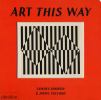 | | Art This Way
by Tamara Shopsin
Kirkus Take a peek at art from a variety of different literal and metaphorical angles.Veritably daring readers to look at art in a fresh new way, this innovatively designed board book features a variety of foldouts, flaps, and die cuts. From its disorienting upside-down first page, the authors use the medium to its best advantage. Never gimmicky, the format enhances readers' understanding of the art. A Lichtenstein pop-art page superbly uses a die cut as a frame to draw eyes to the half-toning that makes the piece work, and lifting a flap "Up" reveals a hanging Calder mobile. This is one of the rare board books that speaks to many ages: A long, colorful foldout of Warhol flower variants would be ideal for a baby to gaze at during tummy time. A Cindy Sherman-inspired shiny mirrored page with black glasses will attract toddlers' eyes, but knowing it works as a disguise will intrigue preschool readers. All of the carefully curated and concisely explained pieces of art are from the Whitney collection. They include sculpture, prints, mobiles, and photography, and male and female artists are showcased equally. The selections, which also include a street-art photograph of children playing with sidewalk chalk and an intriguing sculpture of a woman alongside her small dog, have broad child appeal. Art appreciation with an ingenious twist. (Board book. 6 mos.-5) Copyright Kirkus Reviews, used with permission. Copyright © Kirkus Reviews, used with permission. |
| Caldecott Medal Winners |  | | The Invention of Hugo Cabret
by Brian Selznick
School Library Journal
: Gr 3–6—Brian Selznick's atmospheric story (Scholastic, 2007) is set in Paris in 1931. Hugo Cabret is an orphan; his father, a clockmaker, has recently died in a fire and the boy lives with his alcoholic Uncle Claude, working as his apprentice clock keeper in a bustling train station. When Hugo's uncle fails to return after a three-day absence, the boy decides it's his chance to escape the man's harsh treatment. But Hugo has nowhere to go and, after wandering the city, returns to his uncle's rooms determined to fix a mechanical figure—an automaton—that his father was restoring when he died. Hugo is convinced it will "save his life"—the figure holds a pen, and the boy believes that if he can get it working again, it will deliver a message from his father. This is just the bare outline of this multilayered story, inspired by and with references to early (French) cinema and filmmaker George Méliès, magic and magicians, and mechanical objects. Jeff Woodman's reading of the descriptive passages effectively sets the story's suspenseful tone. The book's many pages of pictorial narrative translate in the audio version into sound sequences that successfully employ the techniques of old radio plays (train whistles, footsteps reverberating through station passages, etc.). The accompanying DVD, hosted by Selznick and packed with information and images from the book, will enrich the listening experience.— Daryl Grabarek, School Library Journal Copyright © Reed Business Information, a division of Reed Elsevier Inc. All rights reserved. Distributed by Syndetic Solutions Inc. Terms
|
| Horn Book Picture Book Awards | 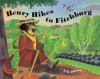 | | Henry Hikes to Fitchburg
by D.B. Johnson
School Library Journal
: K-Gr 4-A nicely realized retelling of a short passage from Henry Thoreau's Walden. Henry and his friend decide to go to Fitchburg, a town 30 miles away. "I'll walk," says Henry, but his friend decides to work for the money for a train ticket and see who gets there first. Each subsequent spread marks their progress: "Henry's friend cleaned out Mrs. Thoreau's chicken house. 10 cents./Henry crossed a swamp and found a bird's nest in the grass. 12 miles to Fitchburg." The friend arrives first, barely. "`The train was faster,' he said." "I know," Henry smiled, "I stopped for blackberries." Johnson makes this philosophical musing accessible to children, who will recognize a structural parallel to "The Tortoise and the Hare." The author quotes Thoreau's original anecdote in his endnote. The two friends are depicted as 19th-century bears in the geometric, warm-toned, pencil-and-paint illustrations. Each picture is solidly composed, and although the perspectives may seem somewhat stiff and distracting up close, they work remarkably better from a short distance. The layout and steady pace, as well, make this suitable for storytime. The somewhat open-ended resolution could allow for classroom debate, and is also simply a good ending to a good story.-Nina Lindsay, Oakland Public Library, CA Copyright 2000 Cahners Business Information, Inc. Distributed by Syndetic Solutions Inc. Terms
|
|

