|
|
| ALA Best Books for Young Adults | 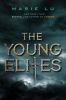 | | Young elites.
by by Marie Lu
Publishers Weekly Starred Review. In this series opener, Lu (the Legend trilogy) pivots from the "coming of age via romance"� formula to pry apart the many emotions that pass under the rubric of love. Adelina Amouteru, once-privileged daughter of a merchant, is irrevocably changed by the blood fever, an epidemic that wiped out infected adults and left most child survivors permanently scarred malfettos. A handful also underwent mutations that conferred strange, often lethal powers. All malfettos are persecuted, but these mutant Young Elites are special targets. Harrowingly, Adelina discovers that she is one. Rescued by a masked firebrand from certain death under the government's Inquisition, she awakens in the custody of Raffaele, a male prostitute, and Enzo, malfetto aspirant to the throne. A beautiful woman surrounded by beautiful men, Adelina nevertheless is not defined by romance. Warped family bonds shape her consciousness and yearning for acceptance, and the men are out to get what they want from her. There's nothing easy here, for Adelina or readers-there are no safe places where the pressures of betrayal, death threats, and rejection aren't felt. Ages 12-up. Agent: Kristin Nelson, Nelson Literary Agency. (Oct.) (c) Copyright PWxyz, LLC. All rights reserved. (c) Copyright PWxyz, LLC. All rights reserved Kirkus A new seriesfantasy, this timefrom the author of the best-selling Legend dystopia. Twelve years ago, the blood fever raged through Kenettra, killing all infected adults and leaving the surviving children marked with scars, patterned skin and unnaturally colored hair. Malfetto, the survivors are called, and everyone knows they are terrible luck. A few malfettos are rumored to have great and mystical powers, and these Young Elites are sought by the Inquisition even while the common people secretly cheer on their defiance against a cruel and ineffectual king. Adelina is a 16-year-old malfetto, tormented by her abusive father until her own Young Elite power reveals itself. Both the Inquisition and the Young Elites want to use her, but Adelina wants only to protect herself and her beloved sister. She's no heroic savior; Adelina's Young Elite strength is honed by a decade of abuse and torment that's turned her into a force motivated foremost by rage and terror. Shifting points of view reveal the forces that treat Adelina as a pawn in a game much larger than she can understand, driving her to an extremely unusual lead-in for Volume 2. In a gorgeously constructed world that somewhat resembles Renaissance Italy but with its own pantheon, geography and fauna, the multiethnic and multisexual Young Elites offer a cinematically perfect ensemble of gorgeous-but-unusual illusionists, animal speakers, fire summoners and wind callers. A must for fans of Kristin Cashore's Fire (2009) and other totally immersive fantasies. (Fantasy. 13 up) Copyright Kirkus Reviews, used with permission. Copyright © Kirkus Reviews, used with permission. Book list *Starred Review* Adelina Amouteru is a walking wound. A deadly fever has ravaged her country, killing many and leaving others marked in strange and dangerous ways. Adelina is a survivor who carries two marks: once-black hair has turned silver, and her left eye is gone. Known as malfettos, those scarred by the disease are considered bad luck, even dangerous. There are rumors that some survivors have magical abilities, and after a dark confrontation with her power-hungry father, Adelina discovers that the fever may have left her with more than scars after all. Thrust into a group of rebel malfettos, the Young Elites, Adelina realizes the extent of her latent powers. Those familiar with Lu's wildly popular Legend series will recognize the author's propensity to include multiple perspectives, and here those viewpoints include other members of the Young Elites and their rebel leader, as well as the queen's Inquisitor, who is hunting them all. Still, this is Adelina's tale. Part bildungsroman, part origin story, this explores the idea that what damages you gives you strength, but often with a price. Lu's careful world building does slow the plot, but the result is that Adelina's Italianesque culture is believable, and the story leads to a whopper of a finale and an even more intriguing epilogue. Fans of Legend or not, readers should prepare to be captivated and to look forward to a continuation of the Young Elites series. HIGH-DEMAND BACKSTORY: A national author tour and promotions at BEA and Comic-Con will help start the buzz for this author, who has already proven she can draw a crowd.--Reagan, Maggie Copyright 2014 Booklist From Booklist, Copyright © American Library Association. Used with permission. School Library Journal Gr 8 Up-A rollicking series opener from the author of the "Legend" series (Putnam). Imagine surviving a plague of fever, only to be marked as an abomination by your countrymen. Most survivors of the sickness that vanquished thousands in this alternative medieval world possess a strange and unique marking, whether it be a facial coloring, oddly tinged hair, or, in Adelina's case, a missing eye. Called malfettos, some are endowed with magical gifts that enable them to control wind, fire, earth, and even humans. All Adelina has ever wanted is to feel accepted and loved, but she's ignored by her father, and her sister doesn't have the power to save her. When the teen escapes an unwanted proposal, she unwittingly becomes a member of the Dagger Society, an Elite group of malfettos bent on using their supernatural abilities to escape the Inquisition's genocide and place their leader, Enzo, on the throne of Kenettra. Adelina struggles with an increasing distrust of Enzo, her fellow Elites, and herself, all while learning how to control her powers of illusion and disillusion. Lu seamlessly melds an unforgettable and intoxicating historical fantasy narrative with a strong female protagonist that grapples with an issue experienced by all young adults-acceptance of one's self. Well written, fast paced without being confusing, and enjoyable enough for teens, reluctant readers, and even adults. Brimming with engaging battles-physical and emotional-and meticulous backdrops, Lu's new series will be a surefire hit with old and new fans alike.- Amanda C. Buschmann, Atascocita Middle School, Humble, TX (c) Copyright 2014. Library Journals LLC, a wholly owned subsidiary of Media Source, Inc. No redistribution permitted. (c) Copyright Library Journals LLC, a wholly owned subsidiary of Media Source, Inc. No redistribution permitted. |
| ALA Notable Books for Children | 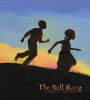 | | The Bell Rang
by James E. Ransome
Publishers Weekly Bold, painterly spreads by Ransome (Before She Was Harriet) give shape to the lives of a slave family whose days are ruled by the overseer's bell. On Monday, "The bell rings,/ and no sun in the sky./ Daddy gathers wood./ Mama cooks." Daddy; Mama; their son, Ben; and the narrator, Ben's little sister, sit close and share a meal. On Wednesday, Ben gives his sister a kiss and a handmade doll, whispering "Good-bye" before walking away with two companions. Thursday, the family realizes that Ben is really gone. "Overseer comes/ to our cabin./ Then dogs come./ Overseer hits Mama,/ then Daddy." The other boys are found, but not Ben: "We pray/ Ben made it./ Free like the birds." In an image of startling force, a flying swallow is seen darting off the last, blank page. Stories about escaping slaves often follow the journeys of those leaving; this one imagines what life was like for a family left behind. The recurring image of the bell throughout each day underscores the way slaves' lives were continually regimented and surveilled. Ransome's gracefully sculpted figures give Ben's family heroic stature; his story makes their hunger for freedom palpable. Ages 4-8. (Jan.) © Copyright PWxyz, LLC. All rights reserved. (c) Copyright PWxyz, LLC. All rights reserved Kirkus A girl's family life and plantation routines are interrupted when three enslaved boys run away. Most days start the same way: The bell rings, Daddy collects wood, Mama prepares breakfast, they eat together. The narrator's brother, Ben, her parents, and the other slaves go to the fields while the girl stays with the young ones to play. On Wednesday, Ben surprises her with a handmade doll. On Thursday, Ben and his two friends are gone. There are tears; the narrator's parents are beaten, and other slaves look mad or sad. On Friday, the girl cannot eat or talk. On Saturday, there are horses and dogs; Ben's friends have been caught, but there is no sign of Ben. "Out comes the whip. / All night we cry and pray for Ben." On Sunday, Big Sam preaches near the creek, "of being free. / We sing. / We hope. / We pray / Ben made it. / Free like the birds. / Free like Moses. / No more bells." The final spread shows the girl looking out, with the single word "Monday" and a bird flying away on the endpaper. The richly textured paintings make masterful use of light and space to create the narrator's world and interior life, from the glimmer of dawn as her father chops wood to her mother's fatigue and her own knowing eyes. Ransome's free-verse text is as accomplished as his glowing acrylics.With spare text and gorgeous illustrations, this work represents a unique and engaging perspective on enslaved families. (author's note) (Picture book. 4-8) Copyright Kirkus Reviews, used with permission. Copyright © Kirkus Reviews, used with permission. Horn Book Using deceptively simple, repetitive verse, an enslaved girl narrates her family's daily plantation activities over a week, every morning beginning with the bell ringing--until Thursday when her brother runs away. The author communicates the complex emotions of individuals fleeing enslavement and the aftermath for those left behind. Through lush watercolors that expertly frame and highlight the characters, the reader is drawn into scenes of tenderness, joy, terror, and despair. (c) Copyright 2019. The Horn Book, Inc., a wholly owned subsidiary of Media Source, Inc. No redistribution permitted. (c) Copyright The Horn Book, Inc., a wholly owned subsidiary of Media Source, Inc. No redistribution permitted. Book list *Starred Review* Every dawn begins the same for the enslaved family of four featured in this book: The bell rings, / and no sun in the sky. / Daddy gathers wood. / Mama cooks. / We eat. The father, mother, and son go to work in the fields, while the daughter spends her days with the younger children. One morning, her brother presents his sister with a handmade doll, a kiss, and a good-bye. The next day, the family discovers that Ben has run away. Tears, fear, and sorrow overtake the family as they wonder about the fate of their beloved son and brother. Beautifully rendered acrylic paintings reveal the closeness of the family, whose pleasure at being together is evident. The richly colored vignettes in Coretta Scott King Award-winning Ransome's single- and double-page-spread paintings clearly picture the emotions felt by the family and the day-to-day monotony of their lives. Swallows are seen flying on the endpapers and over the Sunday prayer gathering, signaling the freedom the family hopes Ben has achieved. The last illustration shows the girl looking at the detested bell, leaving readers to wonder if she is thinking of the day she might choose to run away also. A powerful tale of slavery and its two terrible options: stay or run.--Maryann Owen Copyright 2018 Booklist From Booklist, Copyright © American Library Association. Used with permission. |
| Caldecott Medal Winners | 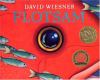 | | Flotsam
by David Wiesner
Publishers Weekly
: Starred Review. Two-time Caldecott winner Wiesner ( Tuesday; The Three Pigs) crafts another wordless mystery, this one set on an ordinary beach and under an enchanted sea. A saucerlike fish's eye stares from the exact center of the dust jacket, and the fish's scarlet skin provides a knockout background color. First-timers might not notice what's reflected in its eye, but return visitors will: it's a boxy camera, drifting underwater with a school of slim green fish. In the opening panels, Wiesner pictures another close-up eye, this one belonging to a blond boy viewing a crab through a magnifying glass. Visual devices—binoculars and a microscope in a plastic bag—rest on a nearby beach towel, suggesting the boy's optical curiosity. After being tossed by a wave, the studious boy finds a barnacle-covered apparatus on the sand (evocatively labeled the "Melville Underwater Camera"). He removes its roll of film and, when he gets the results, readers see another close-up of his wide-open, astonished eye: the photos depict bizarre undersea scenes (nautilus shells with cutout windows, walking starfish-islands, octopi in their living room à la Tuesday's frogs). A lesser fantasist would end the story here, but Wiesner provides a further surprise that connects the curious boy with others like him. Masterfully altering the pace with panel sequences and full-bleed spreads, he fills every inch of the pages with intricate, imaginative watercolor details. New details swim into focus with every rereading of this immensely satisfying excursion. Ages 5-8. (Sept.) Copyright © Reed Business Information, a division of Reed Elsevier Inc. All rights reserved. Distributed by Syndetic Solutions Inc. Terms
School Library Journal
: Starred Review. K-Gr 4–A wave deposits an old-fashioned contraption at the feet of an inquisitive young beachcomber. Itâ??s a â??Melville underwater camera,â?? and the excited boy quickly develops the film he finds inside. The photos are amazing: a windup fish, with intricate gears and screwed-on panels, appears in a school with its living counterparts; a fully inflated puffer, outfitted as a hot-air balloon, sails above the water; miniature green aliens kowtow to dour-faced sea horses; and more. The last print depicts a girl, holding a photo of a boy, and so on. As the images become smaller, the protagonist views them through his magnifying glass and then his microscope. The chain of children continues back through time, ending with a sepia image of a turn-of-the-20th-century boy waving from a beach. After photographing himself holding the print, the youngster tosses the camera back into the ocean, where it makes its way to its next recipient. This wordless bookâ??s vivid watercolor paintings have a crisp realism that anchors the elements of fantasy. Shifting perspectives, from close-ups to landscape views, and a layout incorporating broad spreads and boxed sequences, add drama and motion to the storytelling and echo the photographic theme. Filled with inventive details and delightful twists, each snapshot is a tale waiting to be told. Pair this visual adventure with Wiesnerâ??s other works, Chris Van Allsburgâ??s titles, or Barbara Lehmanâ??s The Red Book (Houghton, 2004) for a mind-bending journey of imagination.–Joy Fleishhacker, School Library Journal Copyright © Reed Business Information, a division of Reed Elsevier Inc. All rights reserved. Distributed by Syndetic Solutions Inc. Terms
|
| New York Times Bestsellers | 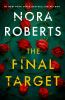 | | The Final Target
by Nora Roberts
Kirkus An author is targeted by a fan who just can’t let her go. Arden Bowie has had plenty of tragedy in her life, but now she’s finally on top. After her parents died when she was a teenager, she moved from Brooklyn to Ohio to live with her aunt, uncle, and cousins. She soon became part of their loving family and grew up to become a writer and bookseller. When her debut novel is published, she meets Dustin Dubecki at her first event. He showers her with praise, asks for writing advice, and wants to take her out for coffee. Arden tells herself he’s just a little awkward, but then he keeps showing up at her local events—and, even stranger, she’s sure she sees him lurking at her event in New York City. When he bursts into her apartment one night and assaults her, Arden’s calm life is shattered. Dustin gets a five-year sentence at a psychiatric facility; Arden spends most of that time rebuilding her sense of stability. Eventually, she moves to Oregon to start a new life where Dustin can never find her. But even though she has a beautiful home, a thriving career, a doting family, new friends, and even a potential love interest in a former cop named Gideon Riley, Arden can’t escape Dustin’s rage when his sentence is finally up. Roberts toggles between Arden’s point of view and Dustin’s, giving the reader occasional glimpses into his extremely twisted mindset. Although Arden’s attempts to escape Dustin are engrossing, the story stalls in the middle when far too many pages are dedicated to Arden purchasing and decorating a house. But the excitement picks back up when Dustin, a truly odious villain, re-enters the story. It’s also satisfying to see Arden grow into someone who refuses to be a victim, even as she deals with horrifying circumstances. A particularly nasty villain heightens the stakes in this thriller about a woman learning how to be her own hero. Copyright © Kirkus Reviews, used with permission. Copyright © Kirkus Reviews, used with permission. Book list The first time is kind of sweet. That is what Arden Bowie thinks when Dustin Dubecki turns up at the launch event for her debut book, Whispers. Claiming to be an aspiring author, Dustin seems harmless if a bit socially clueless. However, when Dustin keeps turning up at events where Arden is speaking, it begins to get creepy. Clearly her efforts to brush Dustin off without hurting his feelings are not working. He shows up at her apartment one evening and forces his way in. While Dustin’s assault of Arden puts him behind bars, Arden still doesn’t feel safe. Moving from her home in Ohio to Oregon seems to be a good step in reclaiming her life. But Dustin has a deadly score to settle with everyone he believes is responsible for putting him in a psychiatric prison, and the last person on that list is Arden. Roberts (The Seven Rings, 2025) masterfully delivers another of her infectiously readable mixes of sinisterly startling suspense and chemistry-rich romance layered into a meticulously crafted plot and enhanced with a realistically relatable cast of family and friends.HIGH-DEMAND BACKSTORY: Since so many of perennially best-selling Roberts' books run in series, readers will be excited about this writer-centric stand-alone thriller. From Booklist, Copyright © American Library Association. Used with permission. |
| Newbery Medal Winners | 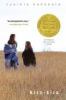 | | Kira-Kira
by Cynthia Kadohata
Horn Book Katie Takeshima's first-person voice is compelling and often quietly humorous as she describes her family's move from Iowa to Georgia and her older sister's subsequent struggle with lymphoma. Katie's shrewd descriptions of people make startlingly vivid this novel that captures both the specific experience of being Japanese American in the 1950s and the wider experience of coping with illness and loss. (c) Copyright 2010. The Horn Book, Inc., a wholly owned subsidiary of Media Source, Inc. No redistribution permitted. All rights reserved. (c) Copyright The Horn Book, Inc., a wholly owned subsidiary of Media Source, Inc. No redistribution permitted. Kirkus Katie loves and admires her older sister, Lynn, only to lose her in this story that reads like a memoir about a Japanese-American family in the 1950s. Built around the loss of Lynn to lymphoma, it belongs to Katie and stays true to her perspective. The supporting cast of extended family and friends also fits within Katie's vision of life. Humor keeps the depth of sadness at bay as Katie reports events: "If a robber came to our apartment, I would hit him over the head with a lamp. So I didn't need a bank, personally." Starting out in Iowa, the family moves to Georgia; both parents work long hours in the poultry industry to buy and then pay for a house of their own. Kadohata weaves details of life for a Japanese-American family into the narrative along with Lynn and Katie's gradual acquirement of understanding of the dominant culture around them. The vivid writing and the portrayal of a most loving and honorable father lift this above the norm. "Kira-kira" is Japanese for glittering, and Kadohata's Katie sparkles. (Fiction. 10-14) Copyright ©Kirkus Reviews, used with permission. Copyright © Kirkus Reviews, used with permission. School Library Journal Gr 6-8-Katie's first word is "kira-kira," the Japanese word for "glittering," and she uses it to describe everything she likes. It was taught to her by her older sister, Lynn, whom Katie worships. Both girls have trouble adjusting when their parents move the family from Iowa to a small town in rural Georgia, where they are among only 31 Japanese-Americans. They seldom see their parents, who have grueling jobs in chicken-processing plants. Then Lynn becomes deathly ill, and Katie is often left to care for her, a difficult and emotionally devastating job. When her sister dies of lymphoma, Katie searches for ways to live up to her legacy and to fulfill the dreams she never had a chance to attain. Told from Katie's point of view and set in the 1950s, this beautifully written story tells of a girl struggling to find her own way in a family torn by illness and horrendous work conditions. Katie's parents can barely afford to pay their daughter's medical bills, yet they refuse to join the growing movement to unionize until after Lynn's death. All of the characters are believable and well developed, especially Katie, who acts as a careful observer of everything that happens in her family, even though there is a lot she doesn't understand. Especially heartbreaking are the weeks leading up to Lynn's death, when Katie is exhausted and frustrated by the demands of her sister's illness, yet willing to do anything to make her happy. Girls will relate to and empathize with the appealing protagonist.-Ashley Larsen, Woodside Library, CA (c) Copyright 2010. Library Journals LLC, a wholly owned subsidiary of Media Source, Inc. No redistribution permitted. (c) Copyright Library Journals LLC, a wholly owned subsidiary of Media Source, Inc. No redistribution permitted. Book list Gr. 6-12.atie Takeshima worships her older sister, Lynn, who knows everything and takes care ofatie while their parents are working long hours in their small Georgia town in the late 1950s. It's Lynn who showsatie the glittering beauty (kira-kira) of the stars and who preparesatie for the prejudice she will encounter as one of the fewapanese American kids in their school. But whenatie is 10, Lynn, 14, falls ill, and everything changes. Slowly the roles are reversed;atie becomes caregiver and does what Lynn has taught her. There's no surprise. It's clear that Lynn will die, andatie goes through all the stages of grief. The real story is in the small details, never self-consciously poetic but tense with family drama. In her first novel for young people,adohata stays true to the child's viewpoint in plain, beautiful prose that can barely contain the passionate feelings.ust as heart wrenching as the sisters' story is whatatie knows of her father's struggle, whether it's his backbreaking work in the factory or his love for his family. The quiet words will speak to readers who have lost someone they love--or fear that they could. --Hazel Rochman Copyright 2004 Booklist From Booklist, Copyright © American Library Association. Used with permission. Publishers Weekly Set in the 1950s and '60s, Kadohata's moving first novel is narrated by a first-generation Japanese-American girl who moves with her family from Iowa to Georgia when their "Oriental foods grocery store" goes out of business. There, Katie and her family face hardships, including discrimination (she is ignored by the girls at school, for example), and the harsh conditions at the poultry plant where her mother works ("thugs" make sure workers do not gather so that they cannot organize). Katie's father often sleeps at the hatchery between shifts, and when their babysitter goes away, Katie and her brother must stay in the hot car outside the plant while their mother works. But it's her doting older sister Lynn's struggle with lymphoma that really tests her family. Katie's narrative begins almost as stream-of-consciousness, reflecting a younger child's way of seeing the world. But as she matures through the challenges her family faces, so does the prose. Kadohata movingly captures the family's sustaining love-Lynn and Katie secretly save their treat money for years so they can help their parents buy a house, and when ailing Lynn gets to pick the house, she chooses a sky blue one, because Katie as a "little girl,... had told her [she] wanted our first to be sky blue." The family's devotion to one another, and Lynn's ability to teach Katie to appreciate the "kira-kira," or glittering, in everyday life makes this novel shine. Ages 11-up. (Feb.) (c) Copyright PWxyz, LLC. All rights reserved (c) Copyright PWxyz, LLC. All rights reserved Publishers Weekly PW starred this Newbery winner, which is set in the 1950s and '60s and is narrated by a first-generation Japanese-American girl, saying, "The family's devotion to one another, and one sister's ability to teach her younger sister to appreciate the `kira-kira,' or glittering, in everyday life make this novel shine." Ages 10-14. (Dec.) (c) Copyright PWxyz, LLC. All rights reserved (c) Copyright PWxyz, LLC. All rights reserved |
| Oprah's Book Club | 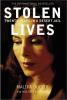 | | Stolen Lives: Twenty Years in a Desert Jail
by Malika Oufkir
Publishers Weekly: While accounts of the unjust arrest and torture of political prisoners are by now common, we expect such victims to come with a just cause. Here, Oufkir tells of the 20-year imprisonment of her upper-class Moroccan family following a 1972 coup attempt against King Hassan II by her father, a close military aide. After her father's execution, Oufkir, her mother and five siblings were carted off to a series of desert barracks, along with their books, toys and French designer clothes in the family's Vuitton luggage. At their first posting, they complained that they were short on butter and sweets. Over the years, subsequent placements brought isolation cells and inadequate, vermin-infested rations. Finally, starving and suicidal, the innocents realized they had been left to die. They dug a tunnel and escaped. Recapture led to another five years of various forms of imprisonment before the family was finally granted freedom. Oufkir's experience does not fit easily into current perceptions of political prisoners victimized for their beliefs or actions. In fact, she was the adopted daughter of King Muhammad V, Hassan II's father, sent by her parents at age five to be raised in the court with the king's daughter as her companion and equal. Beyond horrifying images such as mice nibbling at a rich girl's face, this erstwhile princess's memoir will fascinate readers with its singular tale of two kindly fathers, political struggles in a strict monarchy and a family's survival of cruel, prolonged deprivation. (Apr.)Forecast: A bestseller in France, where Morocco is always a hot issue, this oddly gripping book should also do well here thanks to Oufkir's appearance soon on 60 Minutes and a five-city tour. Film adaptation is a distinct possibility, especially given the book's publisher. Copyright 2001 Cahners Business Information, Inc. Distributed by Syndetic Solutions Inc. Terms
|
|

