|
|
| ALA Best Books for Young Adults | 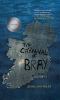 | | The Carnival at Bray
by by Jessie Ann Foley
Kirkus In 1993, 16 year-old Maggie and her family move from Chicago to small-town Ireland with the latest of her mother's romantic partners. Moving to Bray, Maggie leaves behind warm, practical Nanny Ei and beloved Uncle Kevin, a 26-year-old who plays in a band, sneaks her into grunge rock concerts and makes himself responsible for Maggie's musical education. Arriving in Ireland, Maggie finds that she's no better at fitting in with the girls of St. Brigid's than she had been at her old school. Instead, she forms a loose web of connections with local figures: Dan Sean, a Bray legend at 99, whose home becomes a refuge for Maggie in times of family conflict; Ane, the bookish classmate with whom Maggie reluctantly goes on double dates; and Eoin, the gentle boy with whom Maggie falls in love. The narrative subtly and carefully interweaves peer and family dramamuch of it involving troubled Uncle Kevinwith the highs and lows of the grunge music scene, from the transformative glory of a Nirvana concert to the outpouring of grief around the death of Kurt Cobain. Every character, every place comes alive with crisp, precise detail: Maggie's heartbroken mother "howling along in an off-key soprano" to Joni Mitchell's Blue, Dan Sean welcoming Maggie with a Cossack's hat and a hefty glass of port. Powerfully evocative. (Historical fiction. 14 up) Copyright Kirkus Reviews, used with permission. Copyright © Kirkus Reviews, used with permission. Book list It's the eve of 1994, and the grunge movement has reached its fevered height. On Ireland's east coast, 16-year-old Maggie, disgruntled and displaced from her native Chicago, after her flighty mother's recent marriage, listens to Nirvana and misses the uncle in America who snuck her into rock concerts. Her plan is to keep her head down and wait for her mother's relationship to implode, but she finds herself drawn into her new town of Bray and its generations of inhabitants. When her first real loss comes on the heels of her first love, she undertakes a pilgrimage to the mecca of grunge music: a Nirvana concert in Rome. Rock-savvy readers might recognize the time line as the story hurtles towards that infamous April of 1994, but, with or without that knowledge, they will be drawn into the sometimes seedy, sometimes madcap atmosphere of this first novel. A mostly fleshed-out cast of supporting characters and rich storytelling make this appealing both to teens and to the contingent that still has copies of Nevermind on vinyl.--Reagan, Maggie Copyright 2015 Booklist From Booklist, Copyright © American Library Association. Used with permission. School Library Journal Gr 9 Up-This promising debut, set in the heyday of grunge, tells the story of Maggie Lynch, a displaced Chicagoan and grunge music fan, living in a quiet town (Bray) on the Irish Sea. Maggie was uprooted from her friends, her music scene, and her beloved Uncle Kevin when her romantically fickle mother married her latest boyfriend, resulting in a move to his hometown. During her time of difficult adjustment to Ireland, Maggie falls in love with Eion the very moment a devastating loss hits her family, leading to rebellion and a journey to Rome to see Nirvana and fulfill Uncle Kevin's wish for her. Foley sets the scene vividly, writing that Bray has a "soggy sort of grandeur" and weaving in the tiny cultural differences that Maggie has to navigate as an American. The narrative voice is clear and compelling, but Maggie often makes decisions that feel incongruous to her character. She has an independent spirit, but Eion only joins her on the journey because she needs a rescue. A self-professed Nirvana fan, which is critical to the plot, she never seems to like the band as much as she is trying to impress Uncle Kevin. However, the secondary characters are complex and sympathetic: Foley has also populated Bray with a host of quirky, loving, and memorable background characters, which enriches the story. Recommended for teens who enjoy travelogue romance stories or novels about rock music.- Susannah Goldstein, Convent of the Sacred Heart, New York City (c) Copyright 2014. Library Journals LLC, a wholly owned subsidiary of Media Source, Inc. No redistribution permitted. (c) Copyright Library Journals LLC, a wholly owned subsidiary of Media Source, Inc. No redistribution permitted. School Library Journal Gr 9 Up-When 16-year-old Maggie's mother decides to marry someone she just met and move the family from Chicago to Ireland, Maggie is unsure what to expect. Leaving behind her beloved Uncle Kevin and grandmother, Maggie is slow to make friends in the rural town of Bray, though her eight-year-old sister quickly assimilates. Maggie finds refuge with a 99-year-old neighbor and falls for a boy who works in the local pub her mother and stepfather frequent. When Uncle Kevin suddenly dies, Maggie runs away in order to fulfill her uncle's dying bequest to attend a Nirvana concert in Rome. Music is a pervasive theme; it's 1993 and Kurt Cobain, Nirvana, and the grunge movement play key roles in the story. Erin Moon perfectly captures the lilting Irish dialects while clearly differentiating among voices. Portions of Irish folksongs are performed beautifully. -VERDICT The themes of dysfunctional families, moving, first (and awful) sexual experiences, and rebellious music will resonate with teens. Give this to fans of This Song Will Save Your Life by Leila Sales (Farrar, 2013). ["Promising debut": SLJ 9/14 review of the Elephant Rock book.]-Julie Paladino, formerly of East Chapel Hill High School, NC © Copyright 2015. Library Journals LLC, a wholly owned subsidiary of Media Source, Inc. No redistribution permitted. (c) Copyright Library Journals LLC, a wholly owned subsidiary of Media Source, Inc. No redistribution permitted. |
| ALA Notable Books for Children | 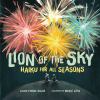 | | Lion of the Sky: Haiku for All Seasons.
by Laura Purdie Salas
Book list In this charming, beautifully illustrated collection, arranged by season, Salas employs a form she calls riddle-ku, a first-person haiku that hints at the speaker, inviting readers to guess its identity, typically an object or being associated with a season. For example, Spring opens with I am a wind bird, / sky skipper, diamond dipper, / DANCING on your string, and López's accompanying illustration depicts a soaring, large, red, bird-shaped kite guided by a boy holding the string below. Summer showcases fireflies, baseball, and fireworks. Fall features a school building ( my first-day outfit / is fresh paint and polished floors / here come my new friends! ), apple picking, and jack-o'-lanterns, while Winter includes snow, ice skates, and a hibernating animal: In fur coat and cave / I exhale white clouds of breath, / DREAM of sun . . . green . . . spring. The eloquent language ranges from philosophical to whimsical, and that tone is reflected in the colorful acrylic paintings, which nicely combine realism and abstract touches and provide visual clues. An author's note offers the inspiration behind her riddle-ku, with encouragement for readers to create their own; an answer key; and a further-reading list. While the riddles' mystique may wane once little ones solve them, the wonderfully evocative, vivid imagery in text and art also make this a welcome addition for poetry classroom units.--Shelle Rosenfeld Copyright 2019 Booklist From Booklist, Copyright © American Library Association. Used with permission. Kirkus In this spirited collaboration, Salas and Lpez present 24 suggestive poetic snapshots chronicling the cycle of a year. Highlighting season-appropriate objects for spring, fall, summer, and winter, Salas magnifies the spareness of the haiku form by turning each concentrated first-person portrait into a riddle as she tantalizingly omits naming the subject describing itself. Meanwhile Lpez offers young and pre-readers florid visual hints, depicting in deft brush strokes and lush colors the author's hidden subjects. Combined, these artists render objects gentle as summer's fireflies ("fire in our bellies / we FLICKER-FLASH in twilight / rich meadow of stars") or winter's snowflakes ("I'm cold confetti / falling from a crystal sky, / blanketing the town," here shown as a white-roofed town in a snow globe painted against a wintry verdigris sky spackled with haphazard white blots) or bold as a fall jack-o'-lantern ("I perch on the porch, / spooky face frozen in place, / fire BURNING inside"glowering large with flaming orange eyes as the finger of a ghostly trick-or-treater rings the doorbell in the background). What sets this volume apart from similar haiku explorations of the seasons is the tight synthesis of visual object and oblique verbal depiction, making for both wonderfully contemplative experiences of each illustrated poem and the seamless progression of nature's cycle through the year.Richly rewarding and clever: a visually arresting, inventive treatment of a popular subject. (Picture book/poetry. 5-10) Copyright Kirkus Reviews, used with permission. Copyright © Kirkus Reviews, used with permission. Publishers Weekly Organized in four sections beginning with spring, Salas's lovely haiku are written in the voices of animals and organic or inanimate objects related to the seasons. "Fire in our bellies,/ we FLICKER-FLASH in twilight-/ rich meadow of stars," speak the summer's fireflies. Each haiku contains a riddle element-readers must guess the narrator (in an author's note, Salas refers to the form as a "riddle-ku"). It's not always clear who, or what, is speaking, but LA3pez's evocative acrylics visually communicate the imagery within the poems. "I'm a WRIGGLING tube,/ soft underground tunneler-/ I fear early birds," one announces. The small bird hovering over a hole clues readers in to the speaker's identity: a worm. The book's meditative tone and resonant images invite readers to embrace new ways of seeing the world around them. Ages 5-9. (Apr.) © Copyright PWxyz, LLC. All rights reserved. (c) Copyright PWxyz, LLC. All rights reserved Horn Book Divided into four sections by season, these "riddle-ku" poems use innovative language to represent something traditionally associated with each one. (For back-to-school in fall, for example: what is "a yellow train / carrying thoughts from your brain / to the waiting page?" A pencil.) In addition to helping readers solve the puzzles, the supporting acrylic and digital illustrations capture movement and texture through strong lines and seasonal hues. (c) Copyright 2019. The Horn Book, Inc., a wholly owned subsidiary of Media Source, Inc. No redistribution permitted. (c) Copyright The Horn Book, Inc., a wholly owned subsidiary of Media Source, Inc. No redistribution permitted. School Library Journal Gr 1-4-A sleek bird kite flown by a child in springtime kicks off this poetic collection of seasonal objects, animals, and activities. Six poems per season invite audience observation and enjoyment. First-time readers may not realize that each haiku is also a riddle with a list of answers found at the end of the book. Only in her concluding author's note does Salas describe the structure she calls "riddle-ku." Readers are meant to guess the identity of the non-human narrator in each poem. She also notes that the non-human voices make these "mask poems." Simple instructions then encourage readers to compose their own riddle-ku. The expansive acrylic scenes featuring children, animals and/or objects offer visual cues about the narrators. For instance, the leaves talk as a child happily bounces in a pile of them. Salas often sets a playful tone and is adept with language. Her diction and syntax are simple and fun. Paired with other seasonal materials, this book offers ample discussion and teaching opportunities with individual readers or groups. VERDICT This well-crafted work contains versatile possibilities for classrooms and libraries.-Margaret Bush, Simmons College, Boston © Copyright 2019. Library Journals LLC, a wholly owned subsidiary of Media Source, Inc. No redistribution permitted. (c) Copyright Library Journals LLC, a wholly owned subsidiary of Media Source, Inc. No redistribution permitted. |
| Caldecott Medal Winners | 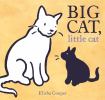 | | Big Cat, Little Cat
by Elisha Cooper
Book list It's all about simple text and clean lines in this picture book about feline camaraderie. Cooper certainly loves and understands cat behavior, as exemplified in his various poses of cats at rest and in action. A big cat (white) welcomes a new little cat (black) to the household, and shows it when to eat, when to drink, where to go, how to be, and when to rest. The white cat is outlined in black lines on generous white space as the two partake in these activities; the black cat is profiled in silhouette, with only one tiny white dot for an eye. As the years go by, the black cat grows bigger, and eventually the white cat has to go. A silhouetted family mourn along with the black cat. But soon a little white cat arrives, and the now-big black cat teaches it all the same lessons. In a final double-page spread the two dream happily, completing the concept of the circle of life in loving contentment.--Gepson, Lolly Copyright 2017 Booklist From Booklist, Copyright © American Library Association. Used with permission. Publishers Weekly Like a Japanese brush painter, Cooper (8: An Animal Alphabet) uses bold, black lines to trace the outlines of a white cat; it roams through an apartment, playing with yarn and gazing at the bird feeder. Then a black kitten arrives, and the white cat shows it "when to eat, when to drink, where to go, how to be." "Big cat, little cat," Cooper writes as the two sleep embraced, their curves a rhythmic composition of black and white. The two grow ever closer until, with little warning, the white cat "got older, and one day he had to go... and didn't come back. And that was hard. For everyone." The black cat is pictured alone on the page; the next spread pulls back to reveal its human family, all bereft. Even younger readers will understand their grief. But when a white kitten arrives, the story begins again: "The cat showed the new cat what to do. When to eat, when to drink, where to go, how to be." With quiet grace, Cooper delivers the message that love persists through loss. Ages 3-6. Agent: Liz Darhansoff, Darhansoff & Verrill. (Mar.) © Copyright PWxyz, LLC. All rights reserved. (c) Copyright PWxyz, LLC. All rights reserved School Library Journal PreS-Gr 1-Bold and simple illustrations perfectly depict life with cats. Elegant, expressive black line drawings on white backgrounds capture the essence of all things feline and call to mind the work of Clare Turlay Newberry and Nikki McClure. The book follows a lone white cat who gains a small black companion, their life together, and the eventual loss of the elder cat ("Years went by-and more years, too-") and ends with the addition of a new kitten. The spare text does an excellent job of conveying the story from the animals' point of view. Readers are told that "the older cat got older and one day he had to go...and didn't come back. And that was hard. For everyone." VERDICT A gentle, loving look at the life cycle of pets; young readers will be able to gain confidence in retelling the story using the text and the pictures. A must-have for all collections.-Paige Mellinger, Gwinnett County Public Library, Lawrenceville, GA © Copyright 2017. Library Journals LLC, a wholly owned subsidiary of Media Source, Inc. No redistribution permitted. (c) Copyright Library Journals LLC, a wholly owned subsidiary of Media Source, Inc. No redistribution permitted. |
| Newbery Medal Winners | 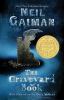 | | The Graveyard Book
by Neil Gaiman
Publishers Weekly
: Starred Review. A lavish middle-grade novel, Gaiman's first since Coraline, this gothic fantasy almost lives up to its extravagant advance billing. The opening is enthralling: There was a hand in the darkness, and it held a knife. Evading the murderer who kills the rest of his family, a child roughly 18 months old climbs out of his crib, bumps his bottom down a steep stairway, walks out the open door and crosses the street into the cemetery opposite, where ghosts take him in. What mystery/horror/suspense reader could stop here, especially with Gaiman's talent for storytelling? The author riffs on the Jungle Book, folklore, nursery rhymes and history; he tosses in werewolves and hints at vampires—and he makes these figures seem like metaphors for transitions in childhood and youth. As the boy, called Nobody or Bod, grows up, the killer still stalking him, there are slack moments and some repetition—not enough to spoil a reader's pleasure, but noticeable all the same. When the chilling moments do come, they are as genuinely frightening as only Gaiman can make them, and redeem any shortcomings. Ages 10–up. (Oct.) Copyright © Reed Business Information, a division of Reed Elsevier Inc. All rights reserved. Distributed by Syndetic Solutions Inc. Terms
School Library Journal
: Gr 5–8—Somewhere in contemporary Britain, "the man Jack" uses his razor-sharp knife to murder a family, but the youngest, a toddler, slips away. The boy ends up in a graveyard, where the ghostly inhabitants adopt him to keep him safe. Nobody Owens, so named because he "looks like nobody but himself," grows up among a multigenerational cast of characters from different historical periods that includes matronly Mistress Owens; ancient Roman Caius Pompeius; an opinionated young witch; a melodramatic hack poet; and Bod's beloved mentor and guardian, Silas, who is neither living nor dead and has secrets of his own. As he grows up, Bod has a series of adventures, both in and out of the graveyard, and the threat of the man Jack who continues to hunt for him is ever present. Bod's love for his graveyard family and vice versa provide the emotional center, amid suspense, spot-on humor, and delightful scene-setting. The child Bod's behavior is occasionally too precocious to be believed, and a series of puns on the name Jack render the villain a bit less frightening than he should be, though only momentarily. Aside from these small flaws, however, Gaiman has created a rich, surprising, and sometimes disturbing tale of dreams, ghouls, murderers, trickery, and family.—Megan Honig, New York Public Library Copyright © Reed Business Information, a division of Reed Elsevier Inc. All rights reserved. Distributed by Syndetic Solutions Inc. Terms
|
| Oprah's Book Club |  | | A Map of the World
by Jane Hamilton
Library Journal: This second novel by Hamilton (The Book of Ruth, LJ 11/1/88) is a stunning exploration of how one careless moment can cause irrevocable and devastating change. Alice Goodwin is caring for her best friend's children when two-year-old Lizzy Collins wanders to the pond on the Goodwin farm and drowns. The consequences of this tragedy reverberate through a small Wisconsin community, which never accepted Howard and Alice Goodwin. Theresa Collins, bereft at losing a child and a dear friend, draws on her Catholic religion and finds forgiveness. Alice, immobilized by guilt and grief and unable to function as a wife or mother to her own two daughters, is charged with abusing children in her part-time job as a school nurse. Lizzy's death is ever present-especially in the bond growing between Theresa and Howard while Alice is in jail-and the pain of it is echoed in Alice's primary young accuser and in Alice as a child, drawing her own map of the world after her mother died. Reminiscent of Rosellen Brown's Tender Mercies (1978), this compelling, multilayered fiction belongs in all collections.-Michele Leber, Fairfax Cty. P.L., Va. Copyright 1994 Cahners Business Information, Inc. Distributed by Syndetic Solutions Inc. Terms
Publishers Weekly: Booksellers should send up three cheers of greeting for this haunting second novel by the author of The Book of Ruth , a beautifully developed and written story reminiscent of the work of Sue Miller and Jane Smiley. A piercing picture of domestic relationships under the pressure of calamitous circumstances, it poignantly addresses the capricious turns of fate and the unyielding grip of regret. Alice and Howard Goodwin and their two young daughters live on the last remaining dairy farm on the outskirts of Racine, Wisc. The farm is Howard's dream, realized with infusions of money from his disapproving mother; but Alice, who is disorganized, skittery and emotionally volatile, is constitutionally unsuited to be a farmer's wife. Her solace is her best friend Theresa, who also has two little girls for whom they alternate days of babysitting. One hot, dry June morning, in the middle of a soul-parching drought, Alice daydreams for a few, crucial minutes while the four girls play. She has rediscovered the map of the world that she made after her own mother died when she was eight; it was an attempt to imagine a place where she would always feel safe and secure. In that short time, one of Theresa's daughters drowns in the Goodwins' pond. As outsiders from the city, the Goodwins have never been accepted in their small community, which now closes forces against them. Still grieving and filled with remorse, Alice, a school nurse, is accused by an opportunistic mother of sexually molesting her son. She is arrested, and since Howard cannot raise bail, she remains in jail, where she suffers but also learns a great deal about human frailty and solidarity. Meanwhile, Howard and the girls undergo their own crucible of fire. Among Hamilton's gifts is a perfect ear for the interchanges of domestic life. The voices of Alice and Howard, who narrate the tale, have an elegiac, yet compelling tone as they look back on the events that swept them into a horrifying nightmare. In counterpoint to the shocks that transform their existence, the drudgery of the daily routine of farm life has rarely been conveyed with such fidelity. Fittingly, however, the death of their hopes as a family coincides with Howard's realization that the farmer's way of life is disappearing as well. The last third of the book, detailing Alice's incarceration among mainly black inmates, is astonishingly perceptive and credible, opening new dimensions in the narrative. One wants to read this powerful novel at one sitting, mesmerized by a story that has universal implications. BOMC and QPB selection. Copyright 1994 Cahners Business Information, Inc. Distributed by Syndetic Solutions Inc. Terms
|
|

